A new year of travels and project-minding has started. At this point it is difficult to say how events will unfold but we have received many questions about what is going on and where we are. Peter is the adventurous side of Abrazos: this year he visited the Mexican province of Chiapas together with our friend and role model Paul Poirier
Paul and Juan
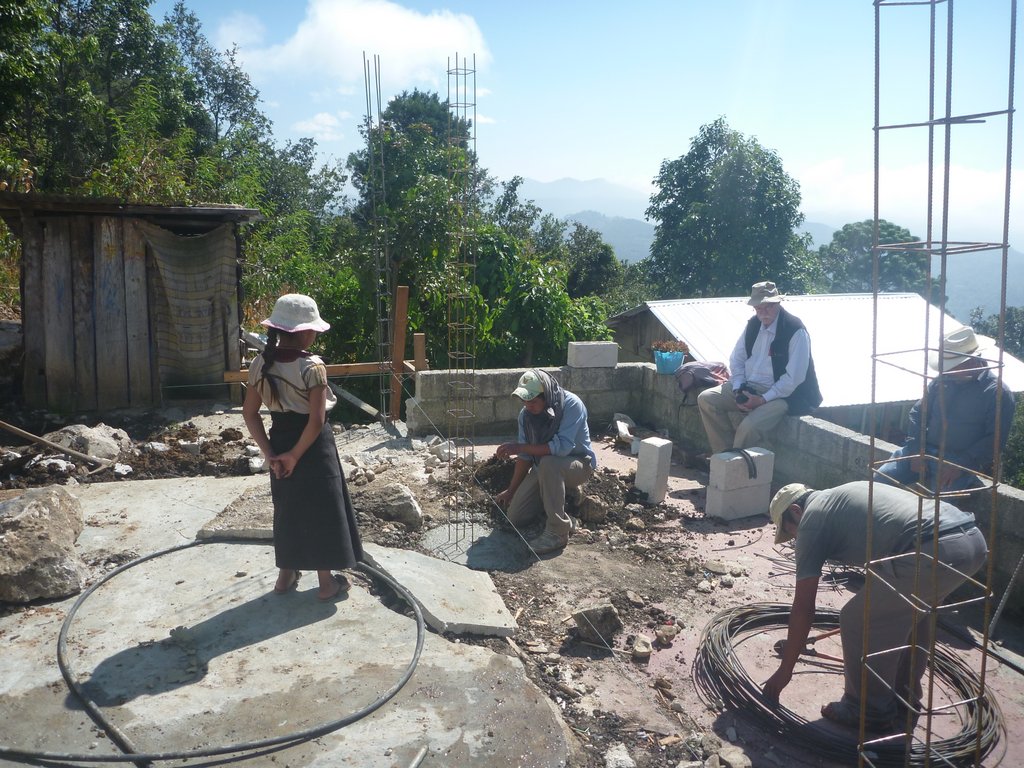
Paul and his wife Diane have visited México many times in the last thirty years. They fell in love with the country and its people, in particular those living in indigenous communities of Chiapas. The couple witnessed the poverty and hardship of the many and decided to do what they could to alleviate the suffering. Ever sensitive to the feeling of others their help would be delivered not from the top down but by collaboration with the local communities. In 1993 the couple, along with friends of their community, formed Arthur Frederick Community Builders: a registered Canadian Charity that raises funds to build homes for the impoverished communities of Chiapas. More than twenty homes as well as thirty classrooms, rain water collection and sanitation systems have been built.
Slowly rising…a new home
Medical and sanitation supplies were provided thanks to the effort and concern of this couple and the many supporters in the cities of Belleville, Ontario and San Cristobal de las Casas, Chiapas. Sadly, Diane died suddenly of a stroke in June 2014; now Paul and a dedicated group in Belleville carry on the work.
AFCB has a very effective system of determining that the funds raised are used to the optimum. It works as follows: The community itself determines which families are most in need (there is no lack of candidates!).
How many children?
Paul and his helper Juan Diaz of Vista Hermosa would meet with each family to determine the priority. Those with the greatest need, usually with numerous dependants, go to the top of the list. Paul, an experienced builder, with the help of Juan and Minerva, residents of Chiapas, consult with the families who select the site and then the quantities of building material are determined. Each family is responsible for providing the labour. It takes a lot of time on the part of Paul and his helpers to insure that the lowest price is obtained for the items of construction. A peso saved here, another there insures that the most houses are built with the limited funds available. This time, 2014 – 2015; eight houses will be built and a ninth if there is money left over. The five under construction for December 2014 will provide shelter for some 36 adults and children. Could one make a better investment?
One of the many important activities in Pina Palmera is the home follow-up visit. They are usually requested by a family member or a friend but sometimes by a concerned villager contacts a member of the staff with concerns. The problems signalled can range from a little baby that is behind in his development to a child or an adult with an obvious disability. The visits are not quite as simple as driving to someone’s house, ringing the bell, and then proceeding with the inquiry and suggestions.
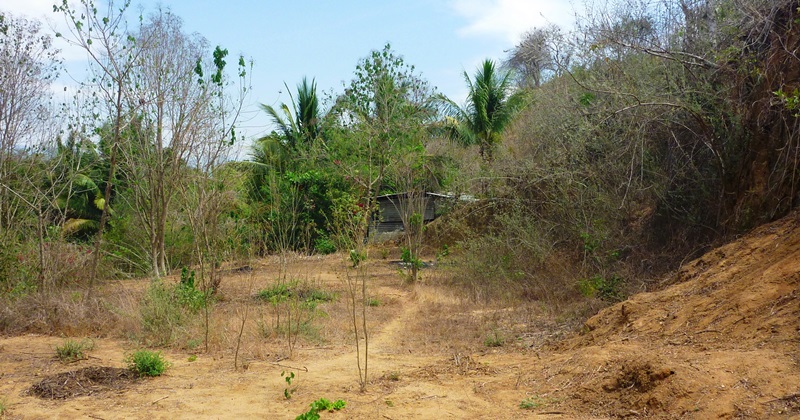
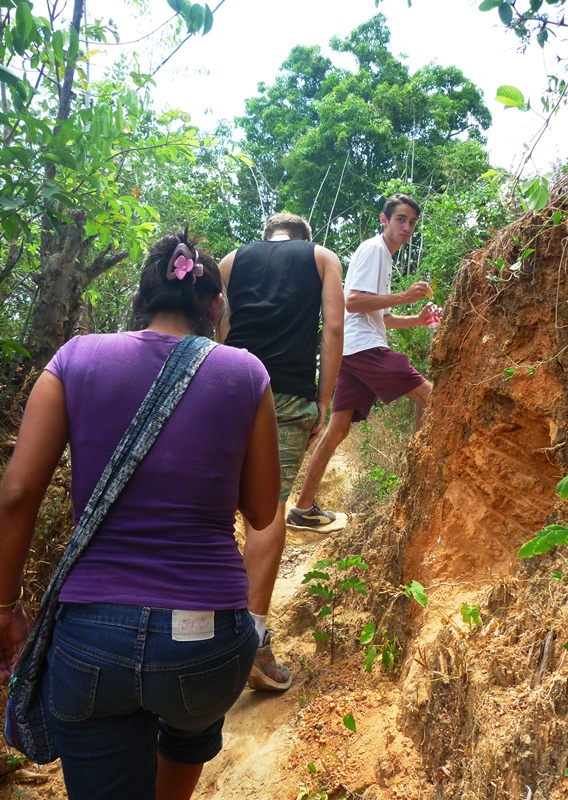
Somewhere in the distance is our destination housePhysical and speech therapy are on the way!
Many times the address is vague: “a brown house close to the small food store” when all houses are brown and there are at least 5 small food stores in the area. Numerous questions about the location are needed, in a village where so many people have the same first and last name and streets have no names or numbers. Afterwards, the team members armed with paper and pencil on which they write and rewrite directions and suggestions regarding the address, start their quest. They walk uphill, downhill, through someone else’s yard, in the sun and dust, followed by various dogs, goats, chickens, and the occasional curious neighbour, arriving at their destination after an unpredictable amount of time. I am always impressed by their perseverance and positive attitude and not least by the infinite patience with which they explain for the hundredth time who they are, what they do, and who they’re looking for.
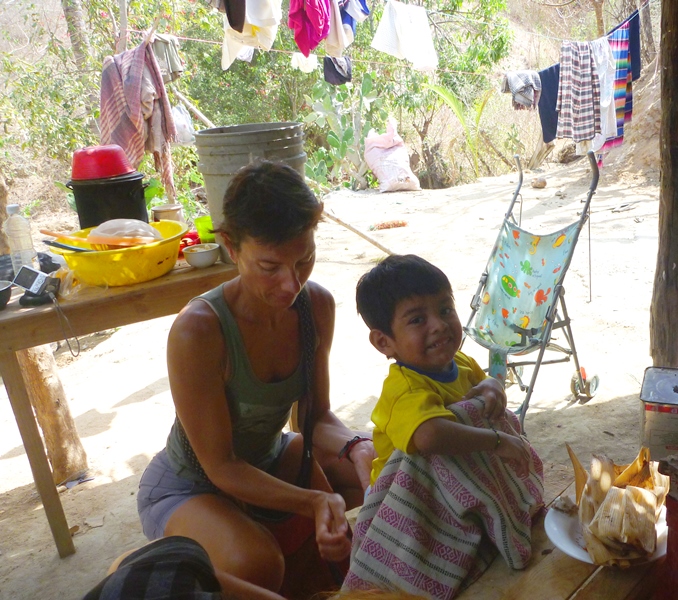
After arriving at the destination, introductions and explanations follow. The little boy we visited on this trip is an adorable 4 year old with cerebral palsy, cared for by one of his aunts (pregnant herself) as the mother works 12 hours/day for 6 days /week.
The house is one big room housing 3 adult women and 4 children, all of them working in some capacity to make ends meet (selling homemade food mainly); the men have either “separated” or are “working and not living here”. This little client is relatively neglected most of the time but otherwise healthy. He is very shy but soon responds to our efforts and turns out to be extremely smart and very knowledgeable for his age, with a lot of enthusiasm for the standing frame we have brought; overall he is starved for attention and stimulation. With infinite patience, Sofia and Mariana (physical and speech therapists) involve the aunt and the other 2 older children in setting up the frame and some basic reaching and standing games that will help our little man develop his leg strength.
Setting up the standing frame
We are hoping that with repeated visits, the family will become more knowledgeable and less burdened by the care they need to provide. He has great potential and could possibly walk short distances with some help.
Wonderful independent standing and a lovely smile!
We had a tough time reaching this house from the main road so it is not likely the boy will be taken to preschool but the therapists will return and try to find some way to eventually include him into the school system.
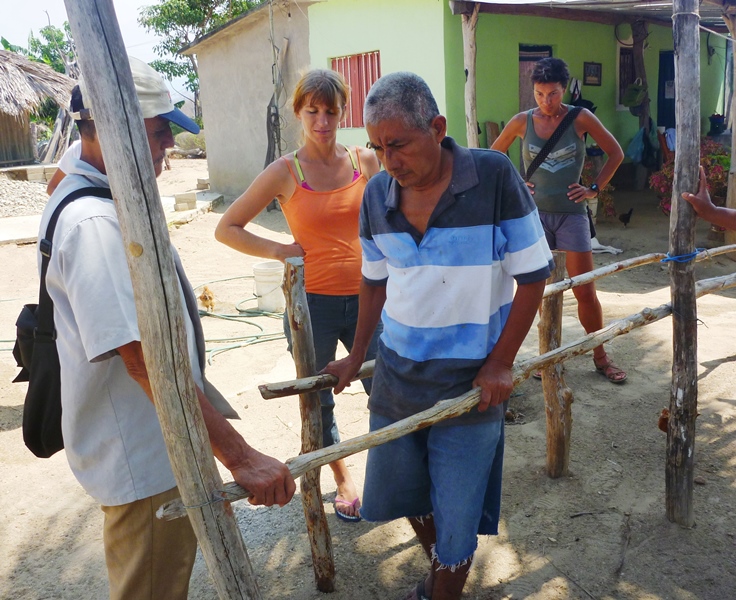
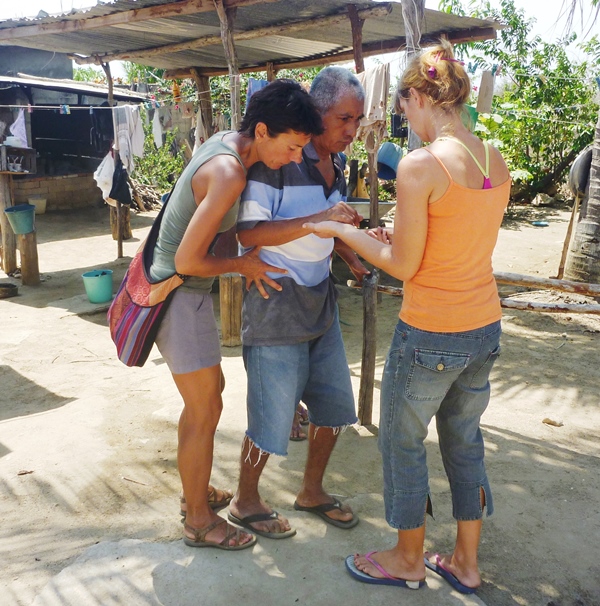
Our next visit involves a man with a brain injury following a blow to his head. He is now blind and unable to speak but making progress in his walking. Last month the team built a set of wooden parallel bars to help him walk in their absence as they can only visit every 2 weeks at best. Today we decided to increase the challenges and had him walking with our support and ultimately with just a little bit of hand guidance. I can’t begin to imagine how difficult it must be for a blind, weak man to walk across a yard full of obstacles, on very uneven terrain, led by some strange women and constantly being asked to do “just a little more”.
Slowly but confidently!
This is just a small part of what is happening here and unfortunately words and pictures can’t capture the tremendous effort displayed by everyone involved in the visits. What most impresses me though, is the sense of satisfaction when, after a long day, everyone returns dusty and sweaty, talking about what they have accomplished and their many plans for the next visit. And you can be sure it will happen, as long as they are wanted and asked to return…and as long as the car will cooperate!
The little car that could….drive uphill with 4 people in it and not fall apart!
We have been at Pina Palmera for a week now and the days fly by with many things happening – here or in different communities.
Pina Palmera main entrance
The teams at Pina have continued with their outreach work, increasing awareness of disability and helping families and people with disabilities find solutions for integration in the community and support from the local authorities.
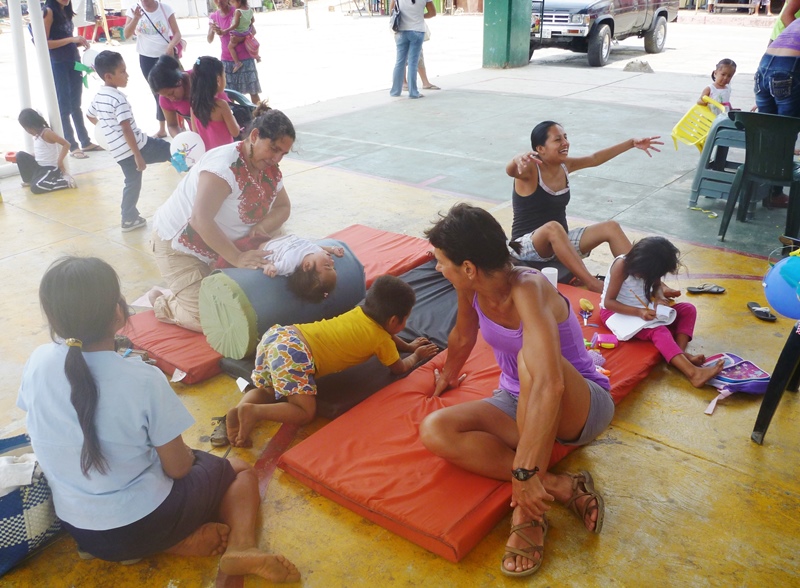
Community work with children and their parents
They visit distant communities on a biweekly basis and conduct their workshops and classes in a private location for all to see and ask questions if they want to. Children without disabilities are present and learn to interact with their classmates or neighbours while having fun.
A lovely happy smile
Additionally, the Pina Palmera group have also been asked to give workshops about violence. This is a huge step, since most of the time violence is not acknowledged, it is part of “normal life” ; most violent events are either borne in silence (familial violence) or simply covered up (public violence).
Workshop on violence
To have adults (of both sexes) sit together, look at and discuss pictures representing violence and actually condemn it, as well as come up with solutions, is a huge step for the Pina team and the community as well. The workshops are offered only to those requesting it (as everything that Pina does), They start with a presentation for the schoolchildren and then extend to their parents. Some communities are not even close to asking for a workshop, in others the topic of sexual abuse is met with dead silence . Celli (the worker leading this workshop) is always optimistic and points out that: “We start with small waves, they spread, and then we get asked back, or go to a new place. That is how it works – and it works!”
The home visits in different communities are going on regularly usually at 2 week intervals, sometimes a little longer.
Our little oven on wheels – fits 6 people, 4 bags, 2 cushions…all in the front cabin!
The current students at Pina (Swedish and Canadian) are trudging through the incredible heat and dust along the staff and volunteers. The team’s work consists of doing follow-up visits in schools with disabled children (blind or deaf) to talk to child and teacher about how integration in the school is happening and if the child is able to cope with the schoolwork. Afterwards, they visit the homes and talk to the parents. The goal is to make teachers and parents feel understood and supported, and have the children actually receive the help they are entitled to.
Follow up at home with mother and children
Again I am reminded of the importance of having access to and from a house or building – in so many places it is impossible for a disabled person to leave the house, never mind attend a school or just meet other people besides their immediate family.
Want to visit the people up there??
If one adds to this the discrimination against the disabled, the lack of knowledge regarding how to help a deaf child (for example) and just the usual life stressors present in Mexico… ….well, I am just happy that people like those working in Pina Palmera exist!
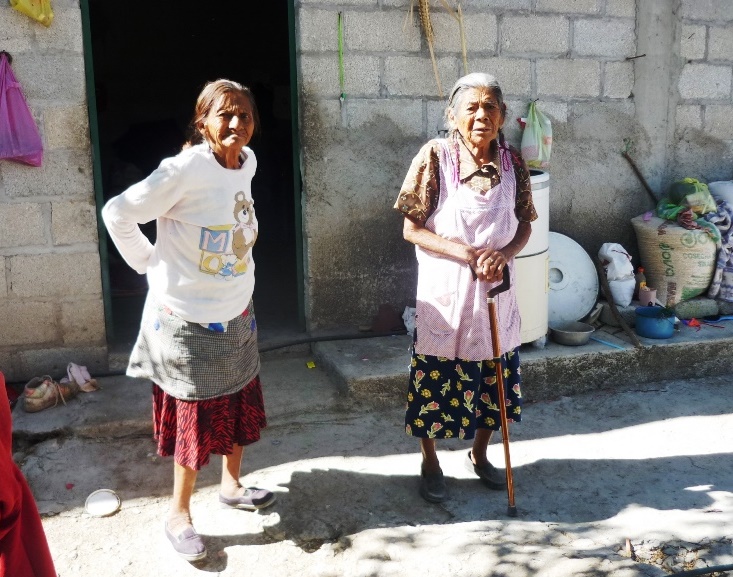
The Santo Domingo Tonala project deals with elderly living in extreme poverty, whose families are either dead or have left Mexico and are unable or unwilling to return or help in any way. These people have worked all their lives in the fields or at farms, have raised children and have done odd jobs but have never received any sort of official “salary” and thus are not included in the social security system. They receive the equivalent of 50$/month if they manage to get to the post office and take it (sometimes the money has mysteriously disappeared). To put things into perspective: the only drinking water available comes in big jugs that cost empty 3.6$ and then 1.5$ each time you fill them. Most live in cement “cubes” with a door only; the lucky ones have windows and a few belongings. Kitchens are outside, bathrooms are usually nonexistent. To cook with gas one needs to invest 60$ in a tank and have it filled with propane for 29$ every 2 months or so.
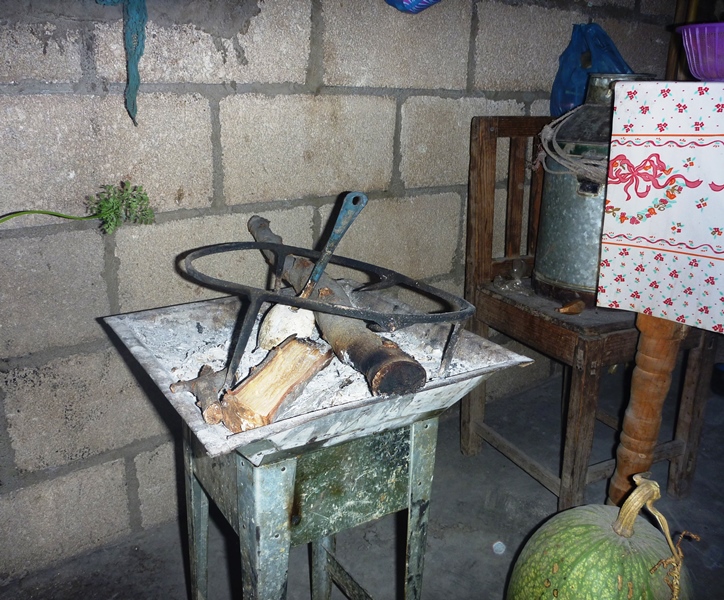
Wood burning stove, indoors
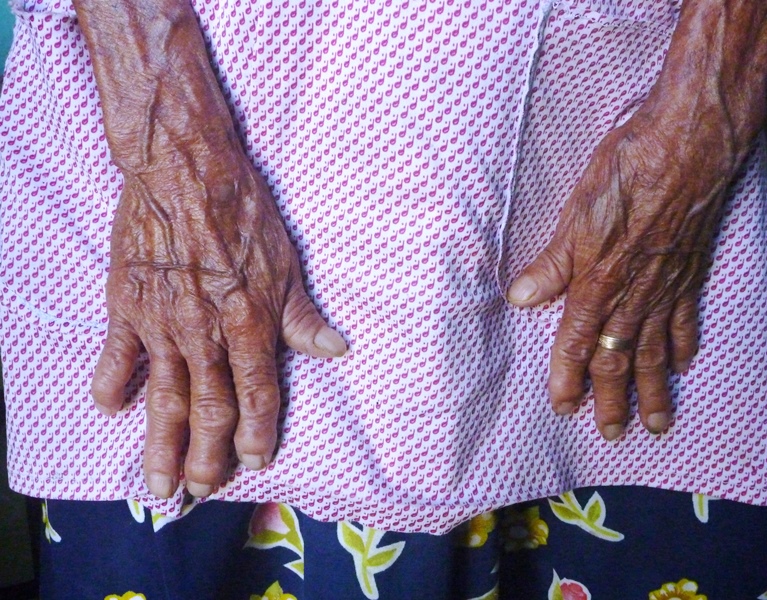
Otherwise one has to collect wood and carry it home from the hills or pay 10$ for a stack (2 months’ worth) Electricity is a luxury and having a source of water nearby is everyone’s dream. Abrazos has supported a monthly food package for the poorest members of the community and thanks to the additional efforts of our agent in Oaxaca (Karen) and her friends, occasional small sums of money arrive and help improve the quality of a few lives. During this visit, we have reconnected with a few of the elderly; most are battling severe arthritis, high blood pressure and diabetes. Tremendous efforts on Karen’s part resulted in money, permit for the work, and a team of workers able to connect a house to the municipal water supply (running water for several hours during 2-3 days/week).
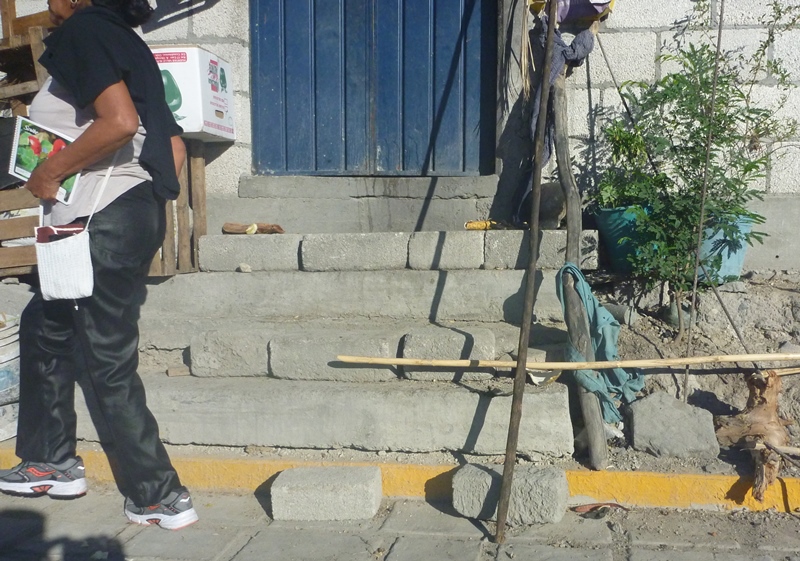
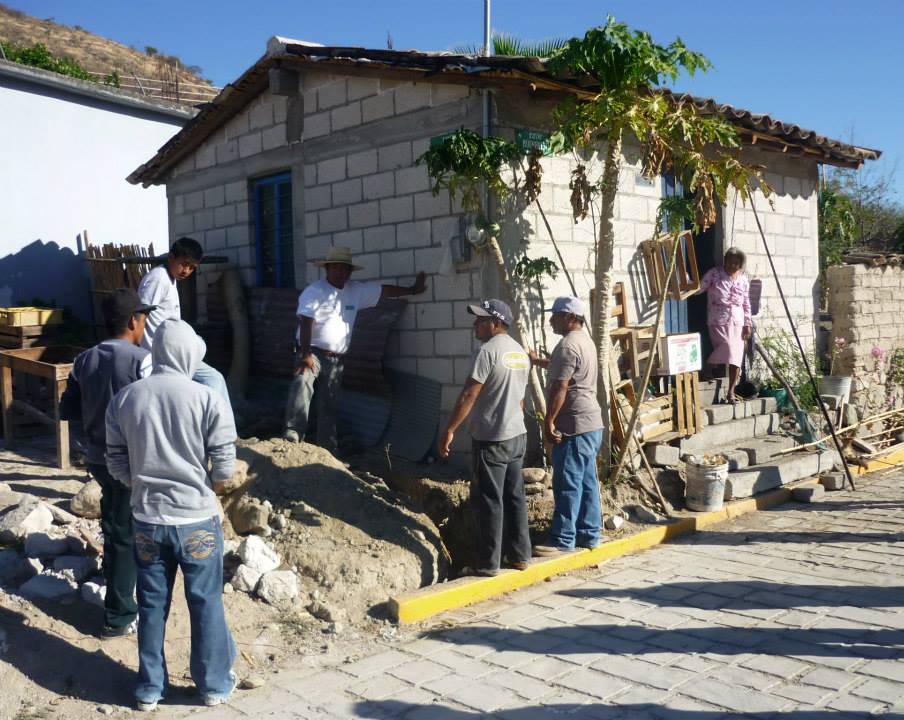
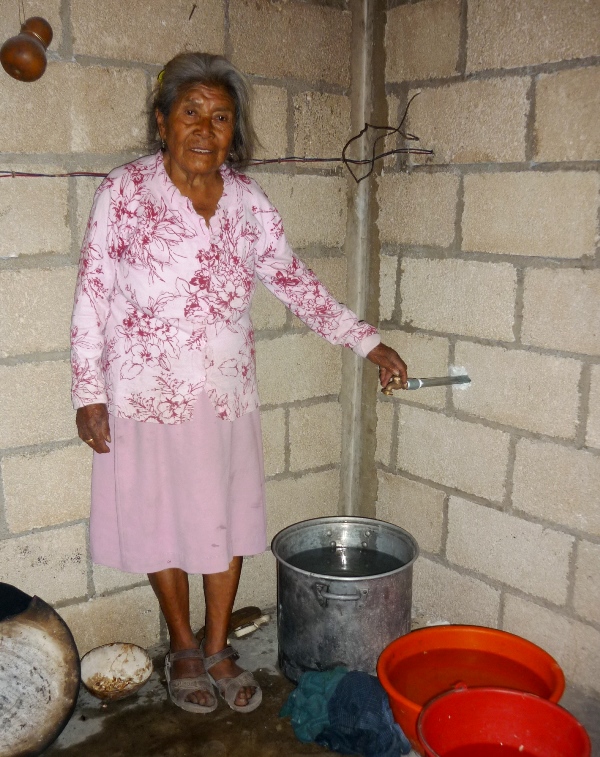
To be climbed several times per day with a pail of water at the age of 83.Our happy recipient at the top of her horrible stairs and the team of workers connecting her to the water supply
Before, this woman would normally walk a fair distance to a village supply, fetch some water in a pail and bring it up the stairs, inside.
Now she is able to actually turn a tap inside the house on, collect water for cooking (drinking water still needs to be bought) and – her biggest dream: wash herself in a small tub!
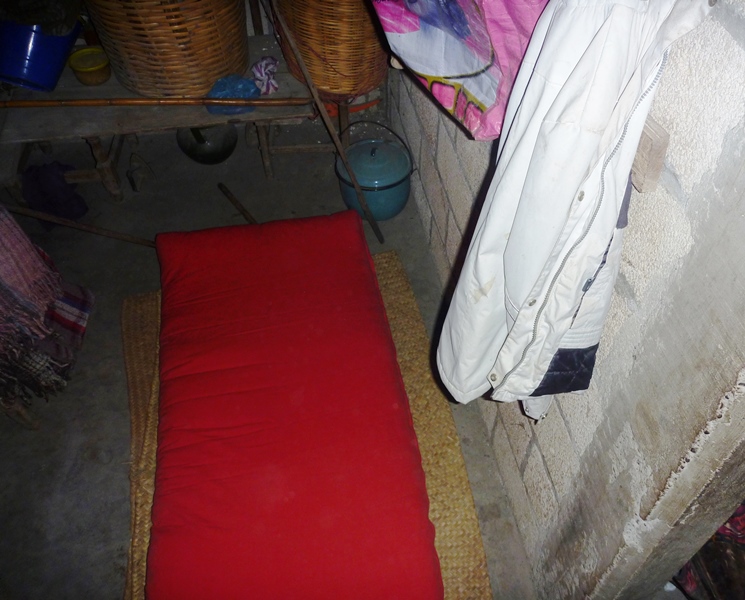
water, finally!Small mattress in a dark and damp space
Additionally, she received a small mattress, so that she won’t be sleeping on the cement floor anymore, particularly during the rainy season when the moisture and cold seep through the cement and turn the house into a damp cavern.
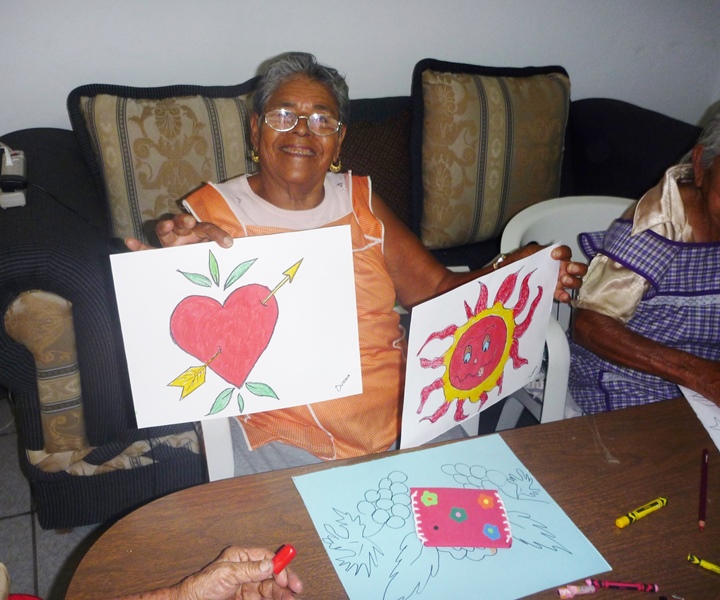
Karen managed to secure a small house where 3 times per week, those who can walk (through dusty, up and downhill streets in extreme heat) get together for socializing and a few activities
All smiles and a big heart!
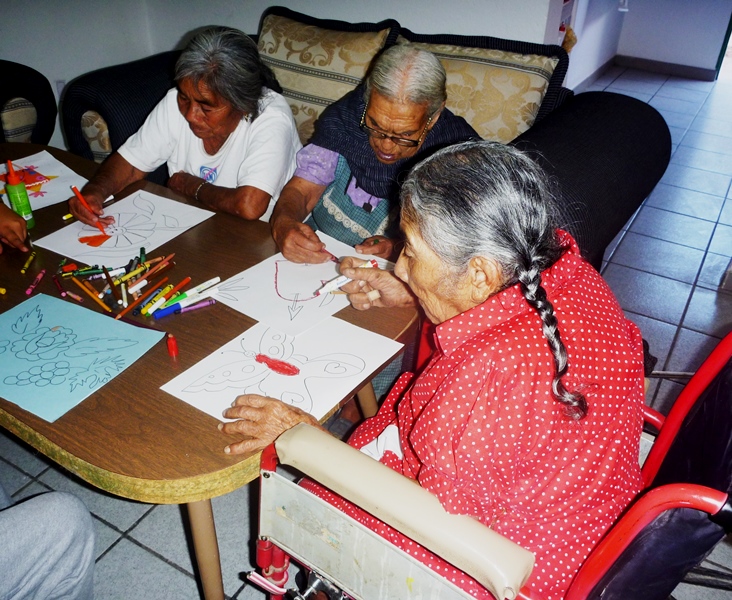
(storytelling, exercises, drawing) that are the highlight of the week in a very isolated life. Sometimes there are enough funds to pay for transportation for those who would otherwise never have the opportunity to leave their homes.
Coloring – no small feat for people who never held a pencil in their hand!
The change is incredible: people who have been marginalized and completely ignored by the local authorities as well as their neighbours and families, are happier, healthier and are reconnecting with humanity and the beautiful parts of life.
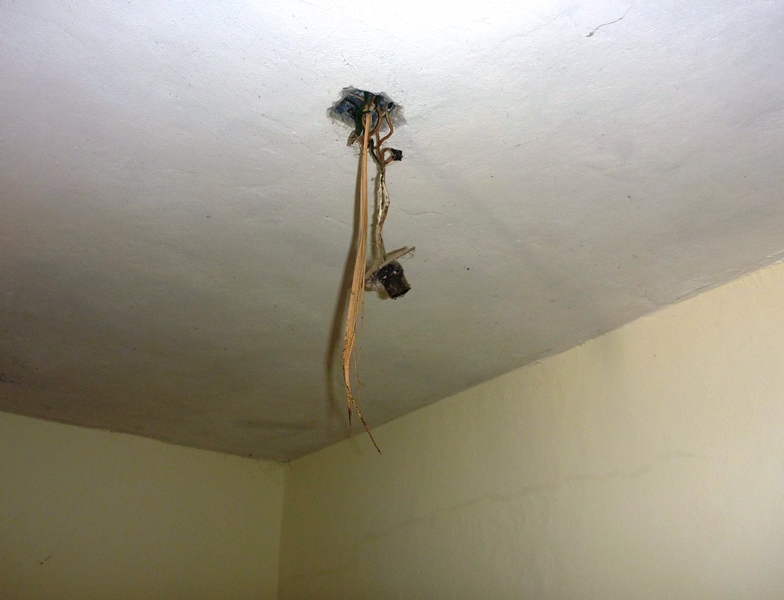
No money for bulbs?…actually one can’t afford electricity anyway!
The project is struggling for funds, the living conditions for many are still incredibly insalubrious and dangerous (from collapsing ceilings to mildewy walls, scorpions and cockroaches, lack of light and water, no stimulation, no assistance during illness, no means of transportation to a market or a doctor).
look at the wall behind us – the moisture damage, still present after months of drought and heat.
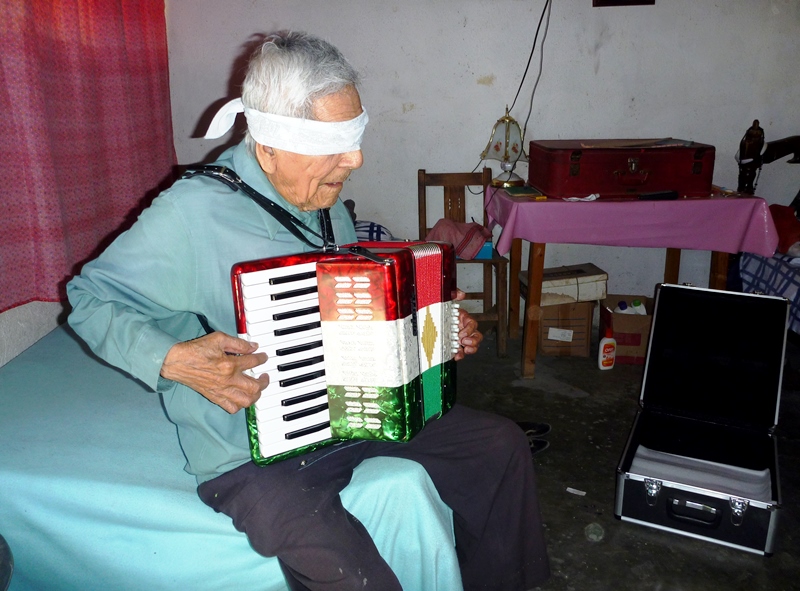
There is no public transportation in Tonala or in the areas nearby. Taxis are 3-4$ one way if one goes to the neighbouring village so most elders walk if they can, or end up isolated. If they need a doctor in one of the nearby towns it is another 4-8$ to get there and usually they need somebody to accompany them. Specialized medical services and tests are to be found in the city of Oaxaca, 4 hours away. Numerous problems appear just because the difficulties of transportation. Don Jose loves playing accordion despite his blindness and Karen was able to obtain an instrument for him.
Don Jose playing for us!
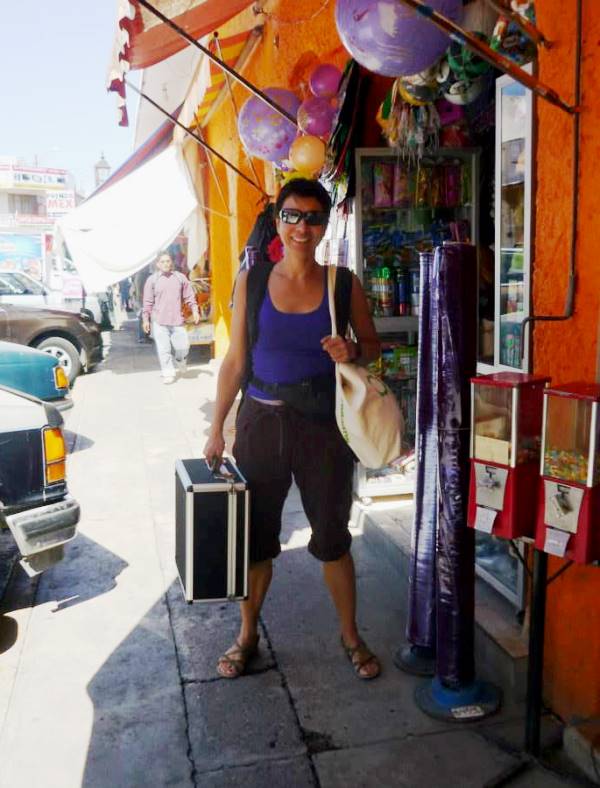
Unfortunately it breaks down and needs replacing, which requires a trip to Oaxaca (4 hours and 12$ one way). Karen’s tremendous patience and persistence resulted in 4 trips so far – this time, we asked Don Jose to play for us, only to find out that one of the keys is faulty…and so the accordion went on its fifth trip to town!
The accursed accordion on its trip to town!
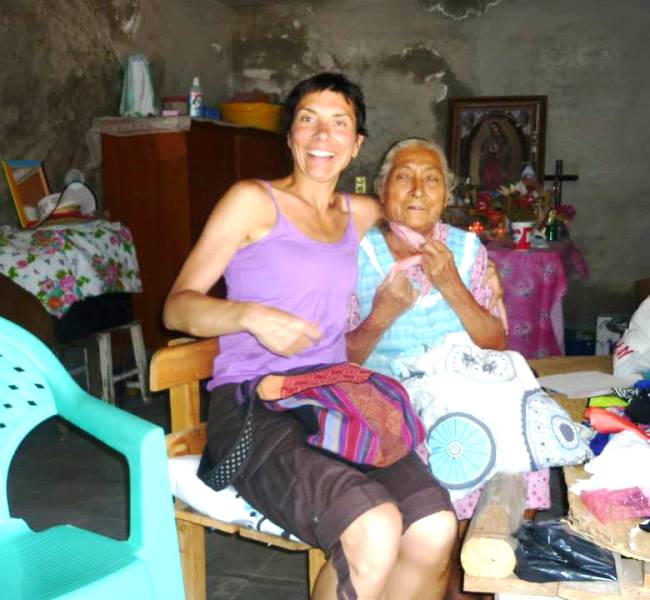
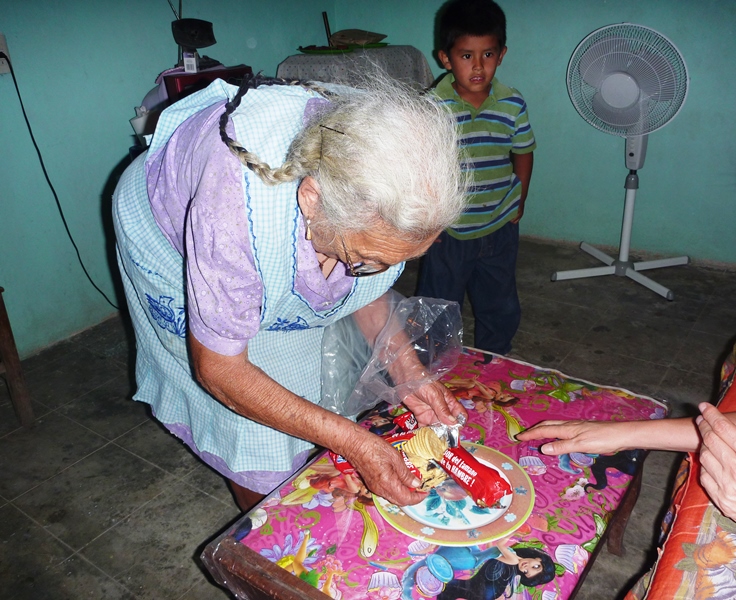
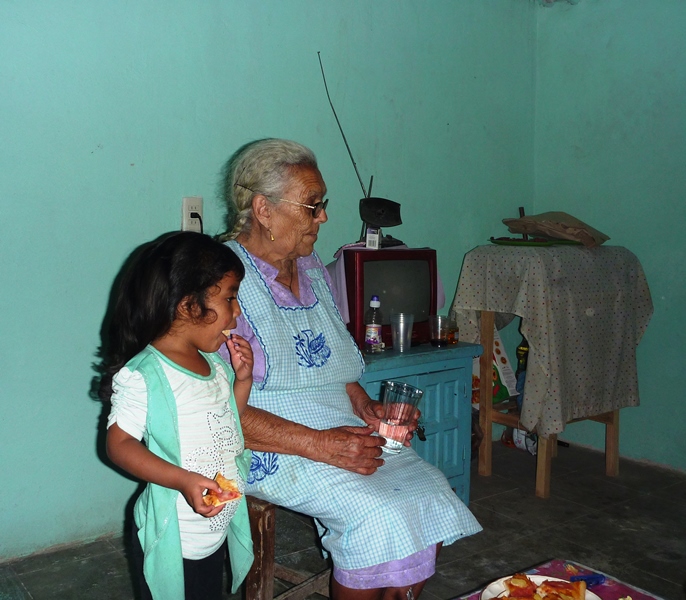
On our last day we had the pleasure of being invited by one of the elders to her place – a new room just for her! After living for years in a space shared with 4-5 other people, she was able (through donations and help from her family) to move into a space where she has privacy and quiet. It is impossible to describe her joy at having us there, the pride with which a package of cookies, a small bottle of coke and 2 slices of pizza (all bought from her savings) were displayed!
A feast of cookies!!
We all shared (with 3 grandchildren and 1 daughter in law) and chatted and made plans…like any group of women visiting anywhere in the world. Such small joys and yet so impossible to reach for so many! A small amount of help makes a huge difference in the lives of many and today it was not money or objects that brought us all happiness – we shared feelings and memories, we brought back a drop of humanity in an otherwise hopeless and stressful life so it did not matter how tired we were! We just sat together, laughing and talking, enjoying the present moment and life at its best!
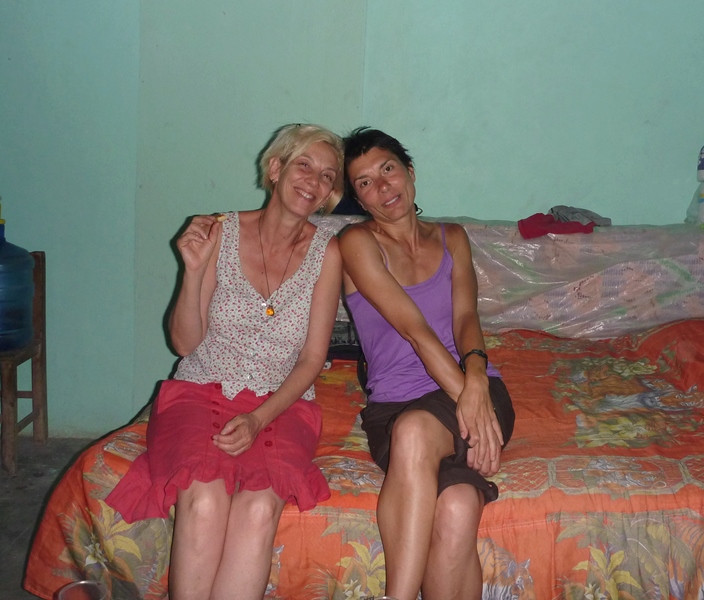
Karen and myself, tired and happy…and eating cookies forever!
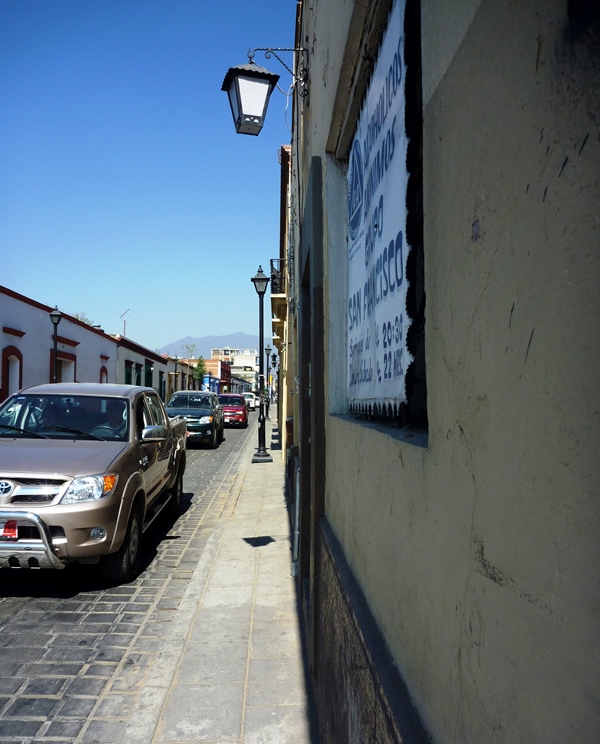
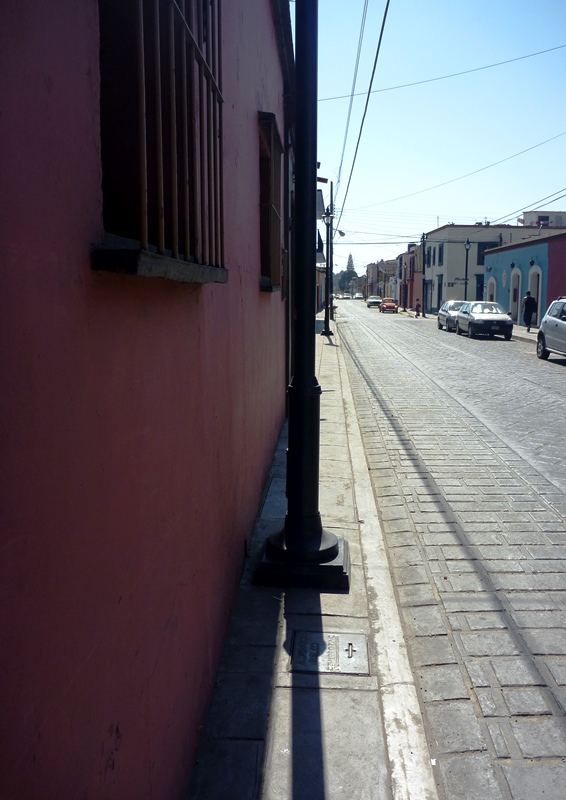
Leaving Quito, Ecuador and arriving in Oaxaca, Mexico, I have been made aware (again!!) that so many things are taken for granted in North America. Walking for example – in the southern part of the continent it is so much more difficult to navigate a sidewalk as an able bodied person, never mind an elderly with a cane or a person in a wheelchair.
Oaxaca
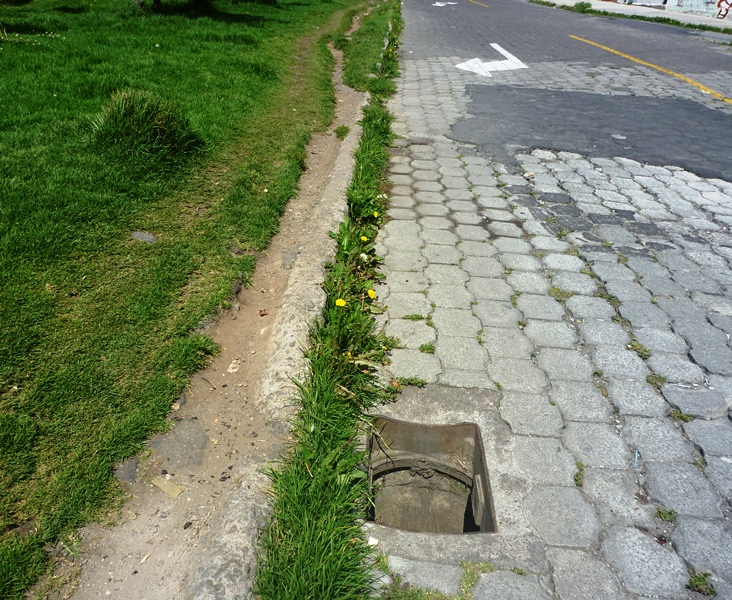
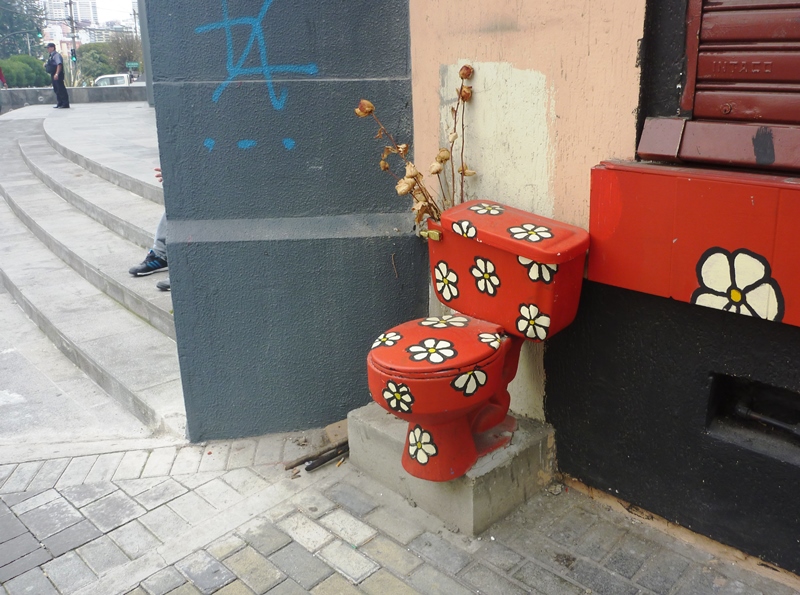
Sidewalks are narrow (to say the least) or inexistent, with curbs as high as 10 inches or more (it is assumed that during the rainy season the water won’t flood the sidewalk…but it still does every year) At times, the curbs are broken into bits and one has to navigate over the rubble. Ramps if they exist are so steep that pushing a wheelchair is next to impossible …never mind self-propelling it. People passing by usually walk straight into each other, veering at the last minute and many tiny collisions are part of a normal promenade, worse if you are actually in a hurry. Peter’s sling was definitely not a reason to give him space. Usually, the narrower the sidewalk, the more people seem to want to walk on it! Despite the many interesting obstacles and “art projects” one encounters, walking is still an energy consuming business with many hidden dangers and challenges.
Modern art?
Occasionally one is followed by a bicycle or a motorcycle, asking noisily for room – what are YOU doing on the sidewalk, where only THEY should rule??
Of course he has the right of way!
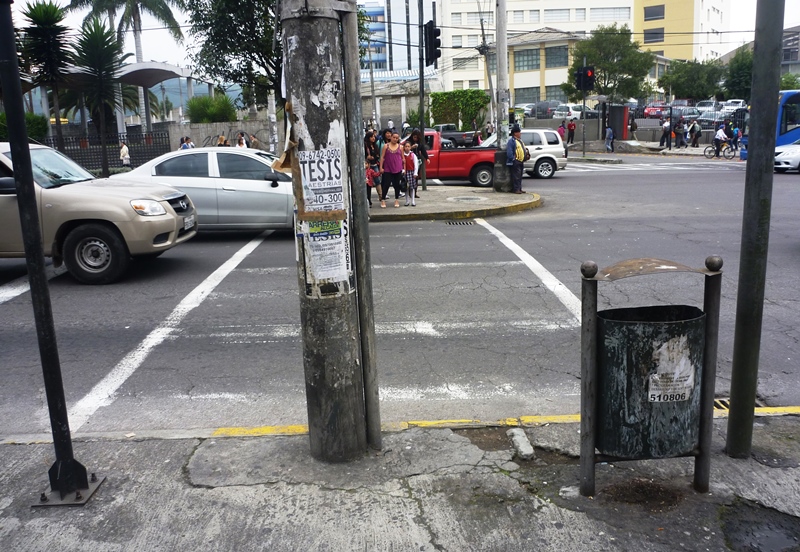
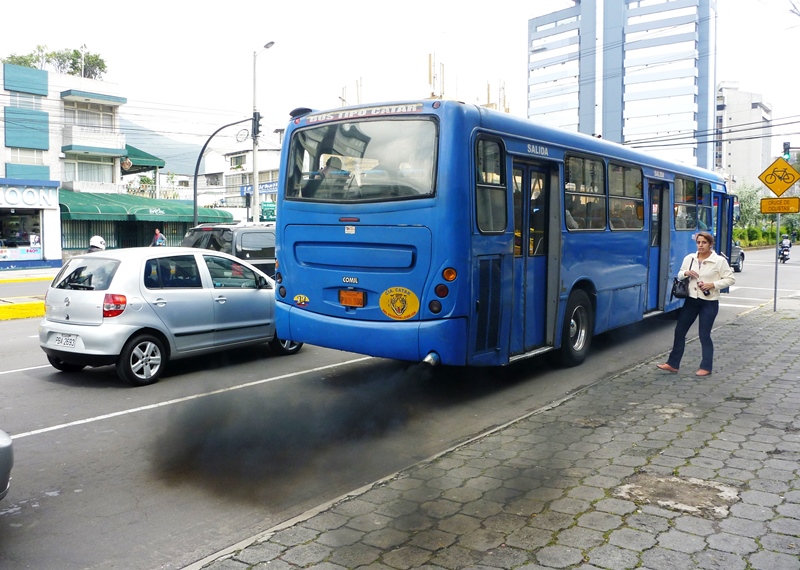
As a pedestrian one has no rights – cars are ruling the roads and pedestrians are divided into two categories: the quick and the dead! In Quito as in Oaxaca, there are 2 lights at most intersections, both are for the vehicles (one for each direction) and the pedestrians are left guessing. In Quito, the occasional light for pedestrians might have a timer : you are given the generous amount of 30 units (overall the equivalent of 15 seconds) to cross a 4 lane intersection. Pedestrians get angry and try to cross everywhere at all times – drivers get angry and speed up while honking continuously.
Not for the faint of heart!
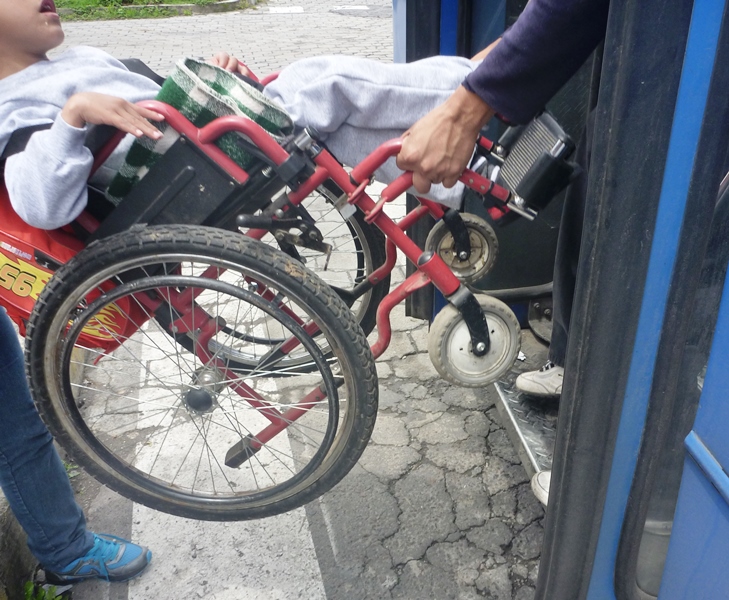
Buses are another story: their job is to drive madly from stop to stop. Whatever happens to the passengers is no one’s business, least of all the driver’s. There are 2 high steps to get into the bus (as it is moving, either pretending to stop or taking off….it is a game of sorts, you just have to play it long enough and you will understand it), the strategy is to hang on for dear life and haul the body in at all costs.
Hop on..it ain’t stoppin’!!!
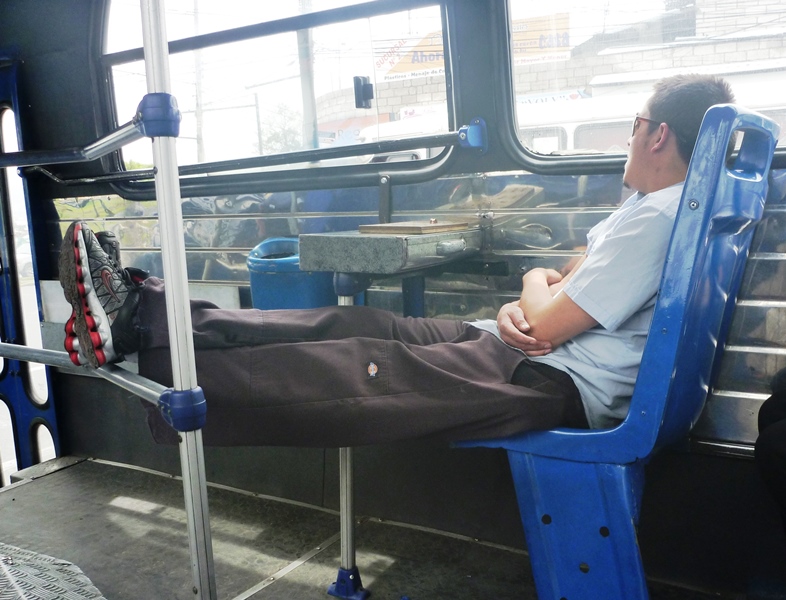
Once on the bus it is recommended to hold on with both hands as the bus flies on the road and only stops (suddenly!) at a red light. It is quite usual to see people being catapulted forwards and backwards in the bus, children and elderly in particular.
To smoke or to take the bus?
Numerous accidents happen when people get on or off (our Spanish teacher in Quito fell and broke her tailbone recently) and a newspaper article talked about a young woman needing bilateral leg amputations after falling off the stair and having the bus run over her legs. If one needs to get a wheelchair on the bus…well one has to wait for a kind soul to yell at the driver to wait, and then help heave the wheelchair on the bus. This should be the conductor’s job but since he is the “driver’s assistant” helping out may be beneath his job description so he usually sits and yells at the driver “close!!” as soon as the wheelchair is inside. It makes getting anywhere really difficult and tiring and I am constantly amazed at all the mothers who bring their children daily to INSFIDIM, at all the elderly who navigate the city to get to the food at Abuelitos (many of them have fallen or have been hit by cars during their travels). Walking seems to be quite different from what I thought it was.
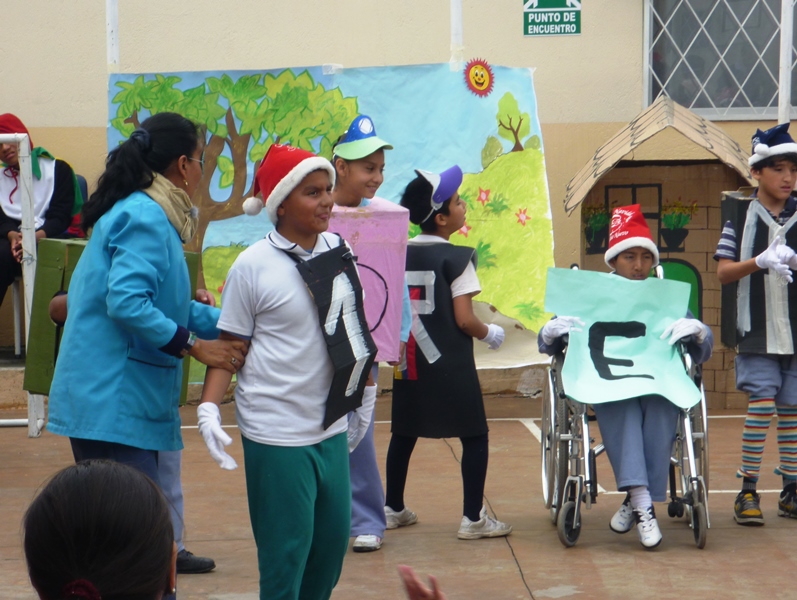
Last day at INSFIDIM coincided with the 16 year anniversary of the institute; therefore a lovely celebration was going on, with all the children taking part in some fashion.
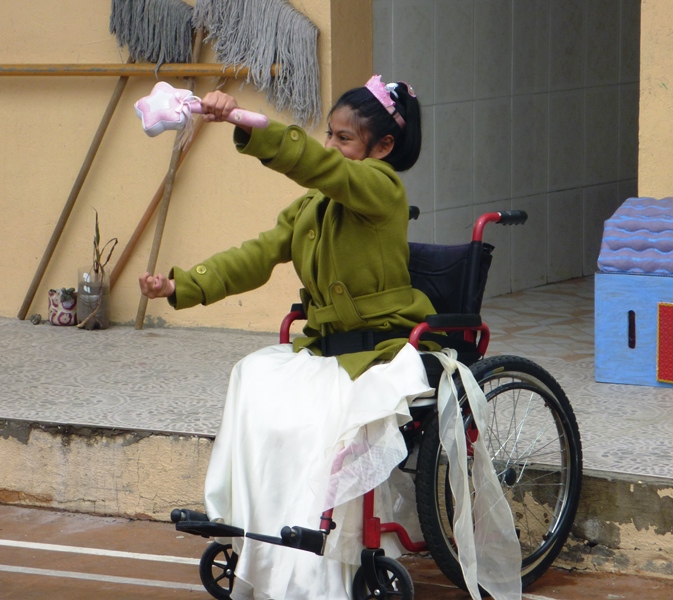
16 years of INSFIDIMWheelchair fairy
Songs and dances were a big part of the show and we found out that all this had been prepared for the last month or so, with parents and staff making costumes and building “props”.
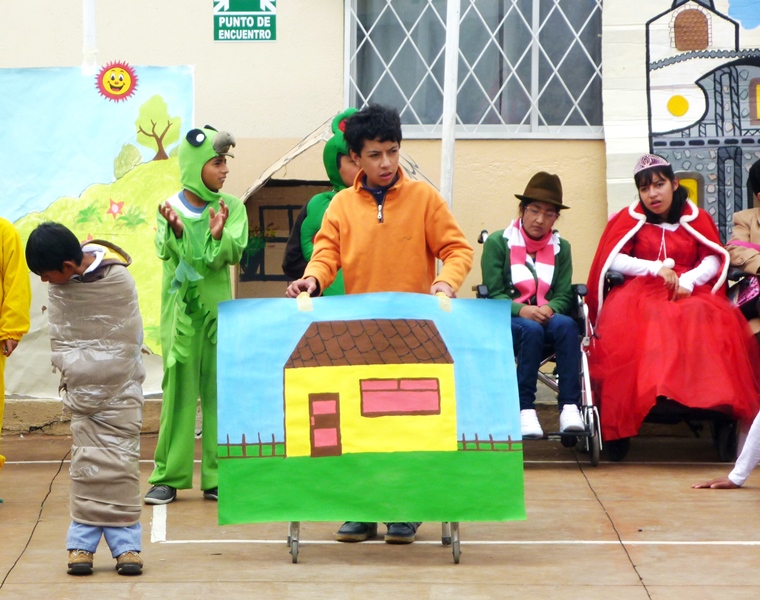
We saw a wheelchair-fairy that was wheeled around so she could touch everyone with her magic wand or sprinkle fairy dust. A short story about house and garden was illustrated with the aid of a house “built” on a 2 wheel walker. Great idea since the “house” had to move around and do a little dance with the insects from the garden!
House on wheels!
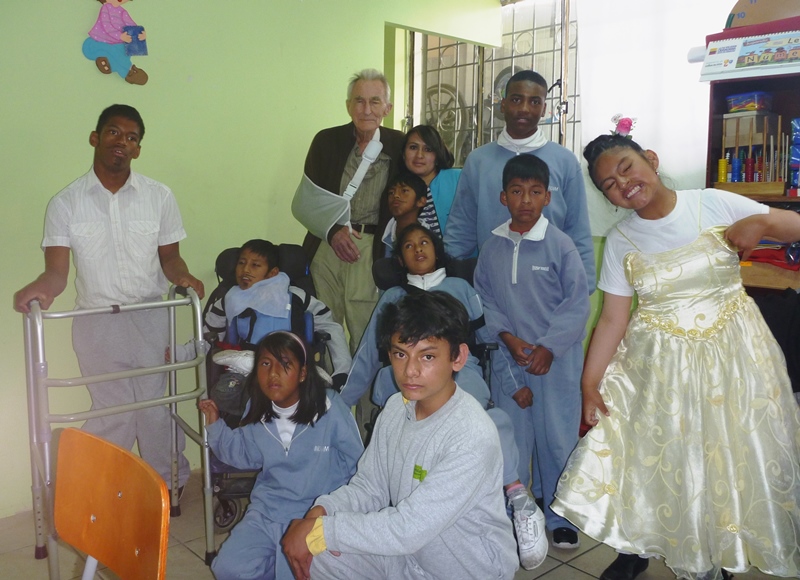
At the end, Peter said good bye to the classroom where he had been volunteering the most – they were all sad to see him go, particularly some of the boys who thought he was quite the hero sporting a broken arm in a sling. We promised to return, we hope to do so, but who knows where our path will take us?
We returned to Abuelitos for the last time to say goodbye and admire the new stove just installed, on top of which the new pots were simmering with “caldo de patas” (basically a broth made out of cow’s feet)
New stove and pots on top of which the shiny new pots simmer away. The kitchen is busy all day long and Josina helps us along while inspecting one of the lunch concoctions.Kitchen inspection
Some of the Abrazos funding went for food supplies in preparation for the traditional Easter soup – Fanesca – which contains several kinds of dried beans, several vegetables) including cabbage and squash) butter, cream, 3 kinds of cheese, dried (and very smelly) fish and is served with slices of hard boiled eggs floating on top and lots of hot sauce (to jumpstart the heart into beating again I suppose!) For next year, there is already a request for a small stool so that the cook can peek inside the pots…hopefully without falling into them and getting lost forever!
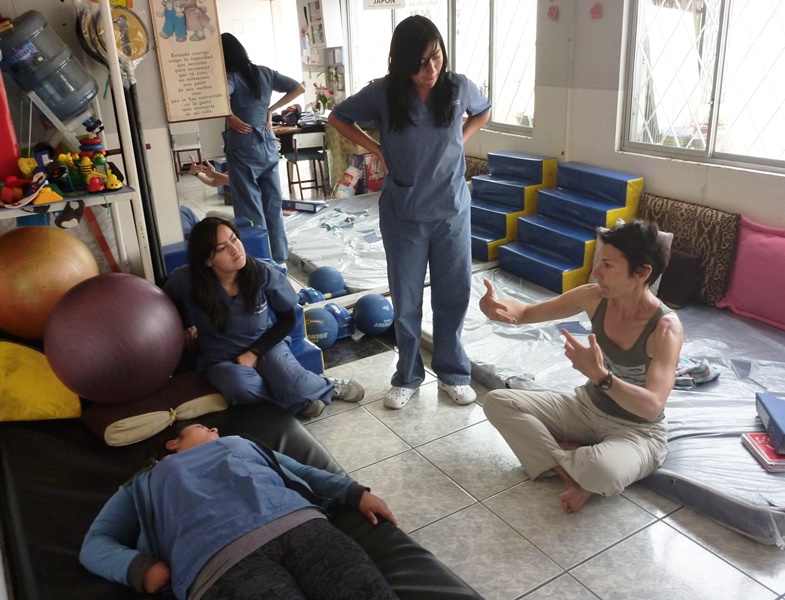
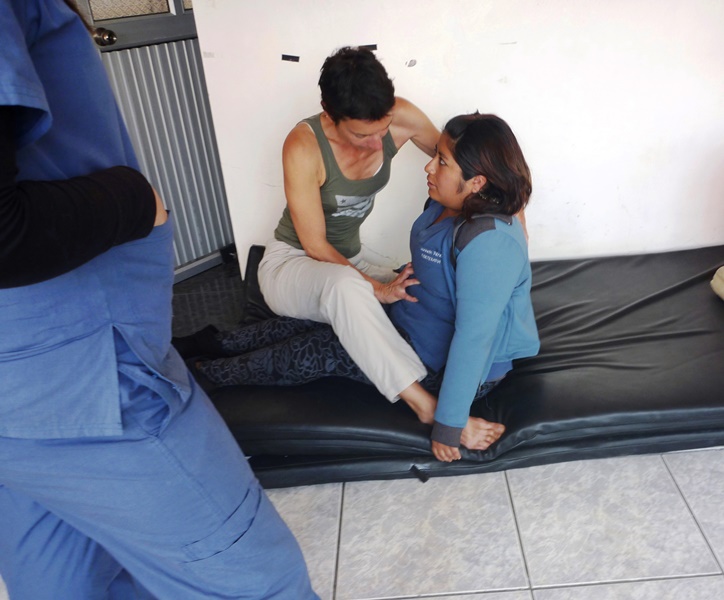
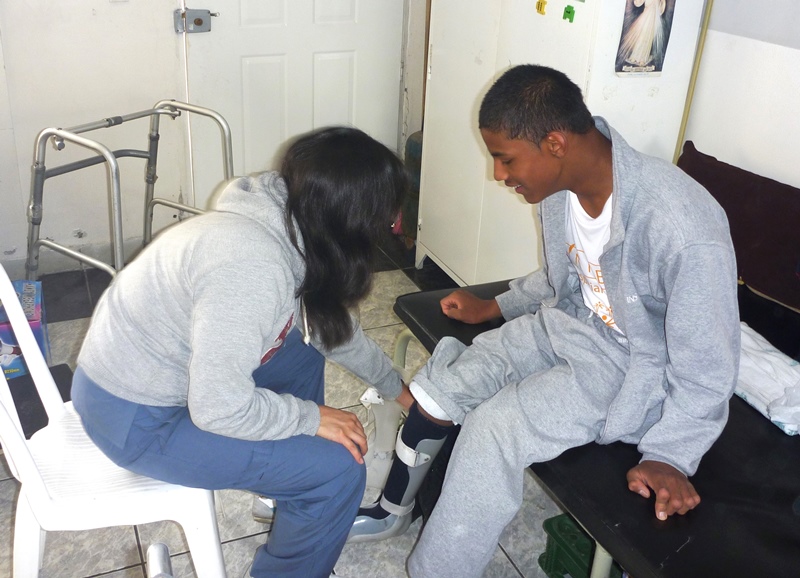
The therapists at INSFIDIM are lovely people – kind and nurturing to the children and eager to learn new skills to help their patients. Truth be told, the therapy practiced is somewhat old-fashioned so I was happy to share whatever I know with a group of therapists.
Talking …or just using gestures to make a point.
Very patient with my poor Spanish and quite willing to be “mock patients”, they put up with me for a whole morning.
volunteering for demonstrations
They shared their frustrations, mainly caused by poor resources but also by the lack of parent education resulting in wasted efforts in physiotherapy. Given the large numbers of children they are trying to help, it is very frustrating to spend time teaching a child how to walk, and then see their efforts wasted by parents who carry it and treat it as totally disabled.
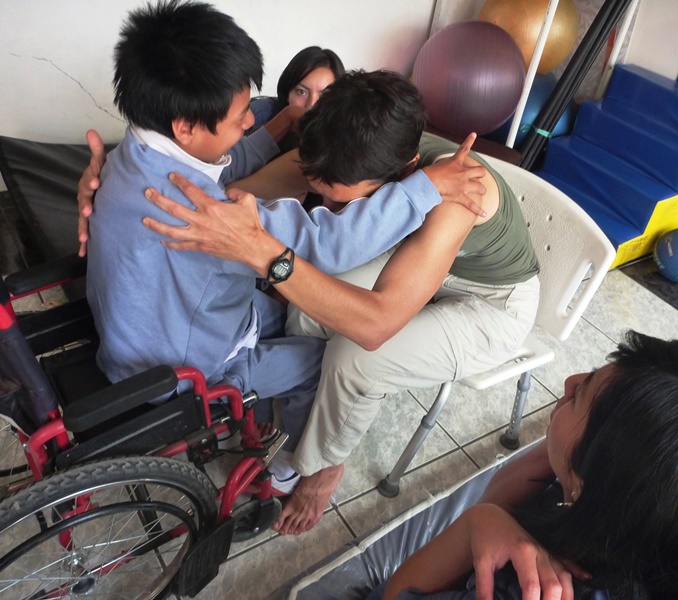
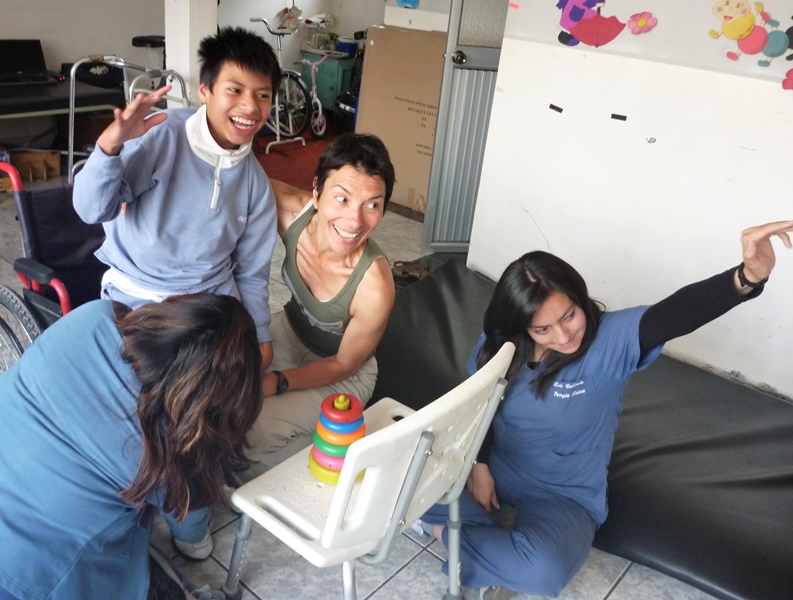
At the end we had a joint therapy session, trying to help a little one overcome his spasticity and stand with support, something he had not done in a long time.
Everyone is working hard!
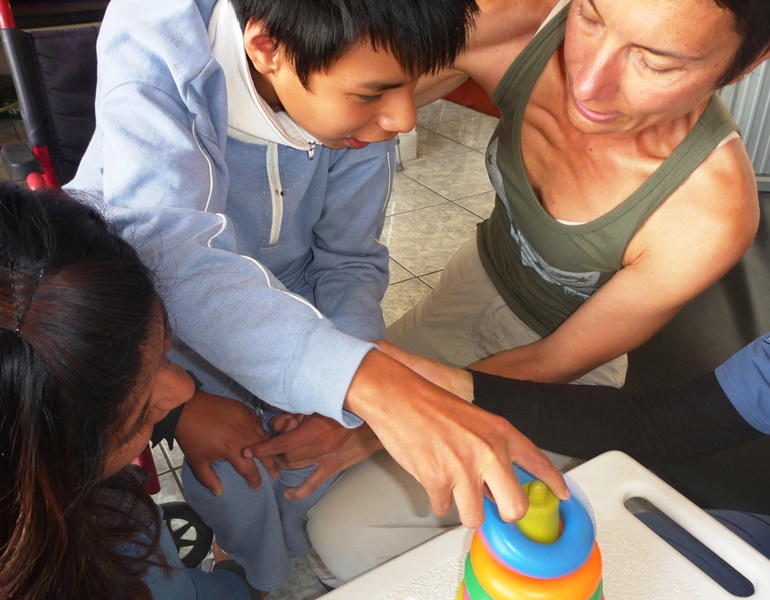
Another problem to overcome is the frustration the kids experience when doing exercises in ways that are uncomfortable and make no sense. It seems that for most of the older kids, therapy is some sort of unpleasant and painful medical procedure that needs to be done because parents and doctors say so.
Fun…and work (but in disguise!)
Teaching the therapists how to turn exercises into a game and have the child move and “exercise” while playing, made it a lot of fun for all of them and, hopefully, will be remembered for some time after I leave.
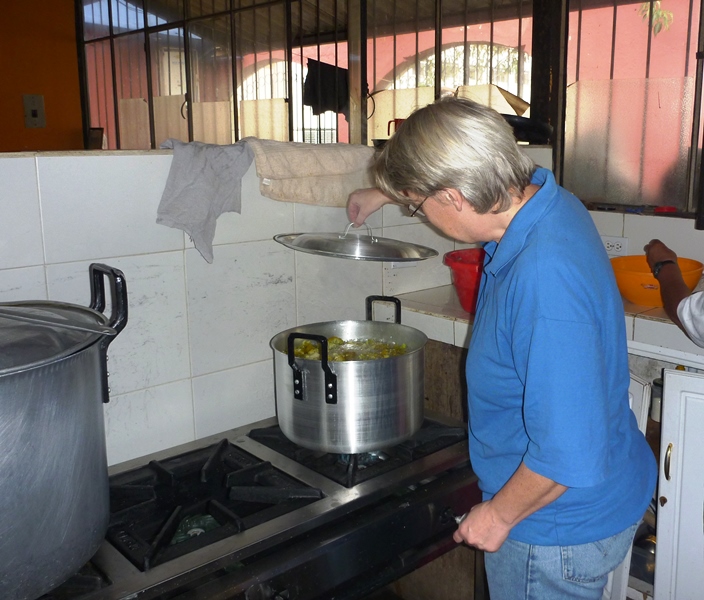
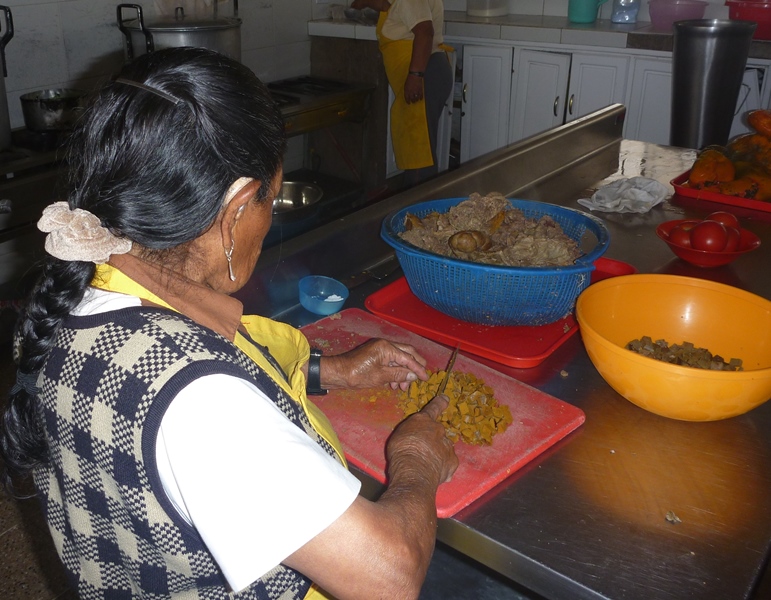
We returned to Abuelitos for an additional look at the kitchen. Cooking for 120 people or more, every day, is no easy task
chopping food for over 100 people
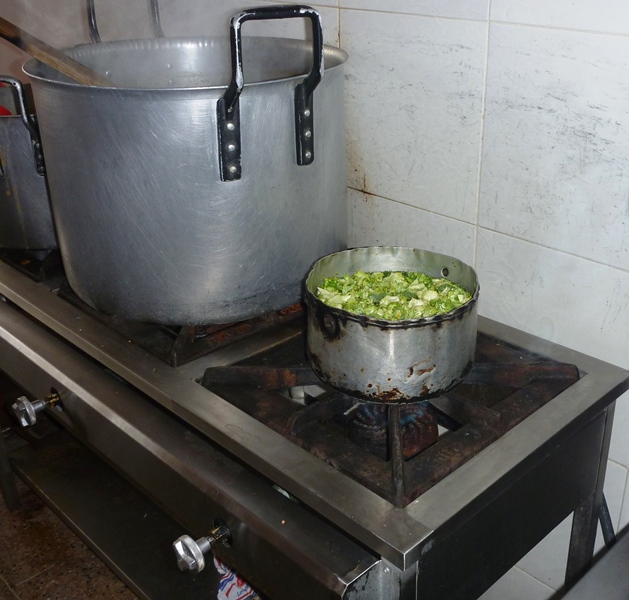
and the kitchen has a broken stove and a mixture of small pots and industrial pots
Tools of the trade
which make life difficult for the cook and kitchen helpers. After discussing things with Josina, Abrazos will help with the purchase of 2 industrial pots ,a food processor as well as a new stove.
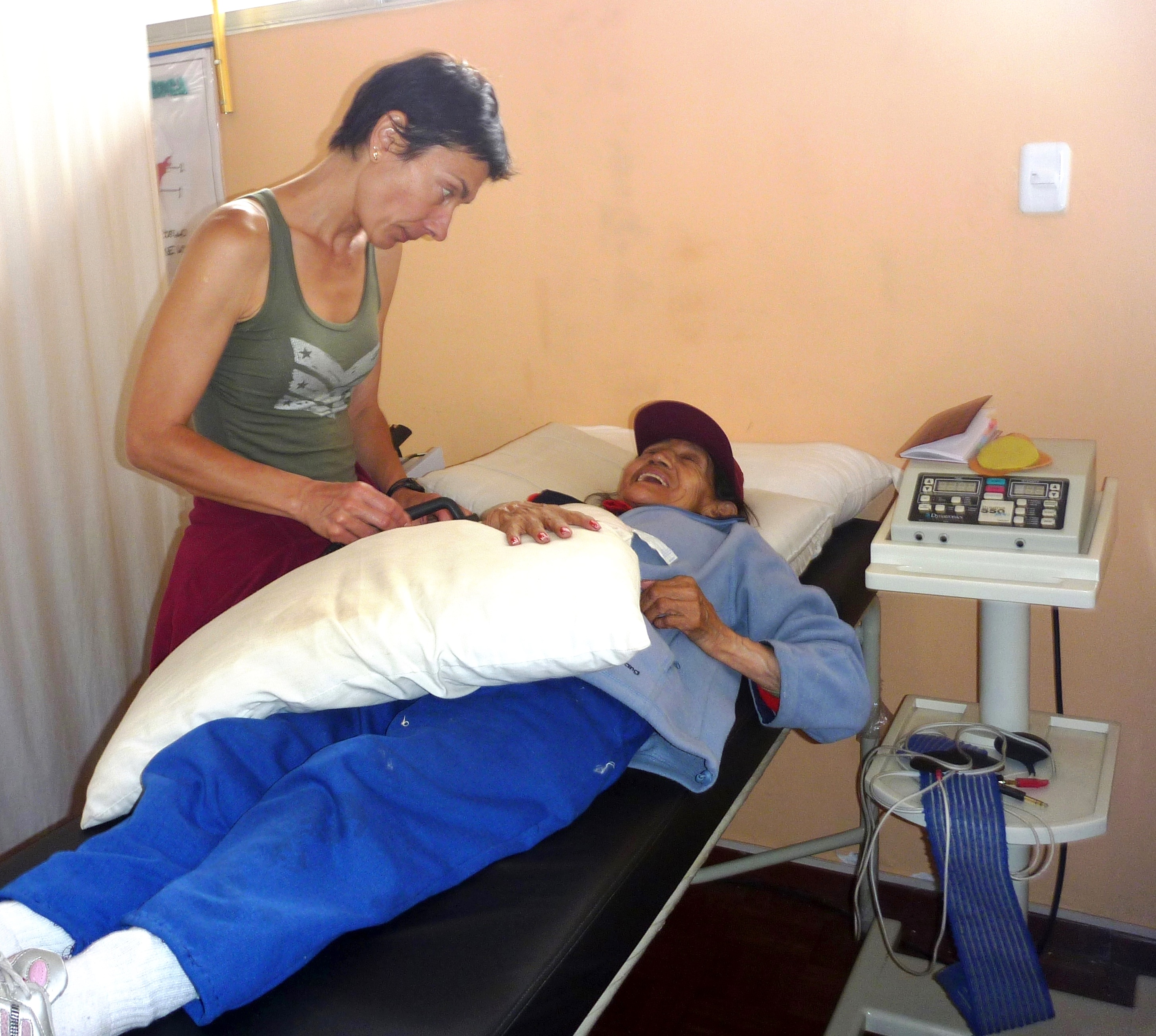
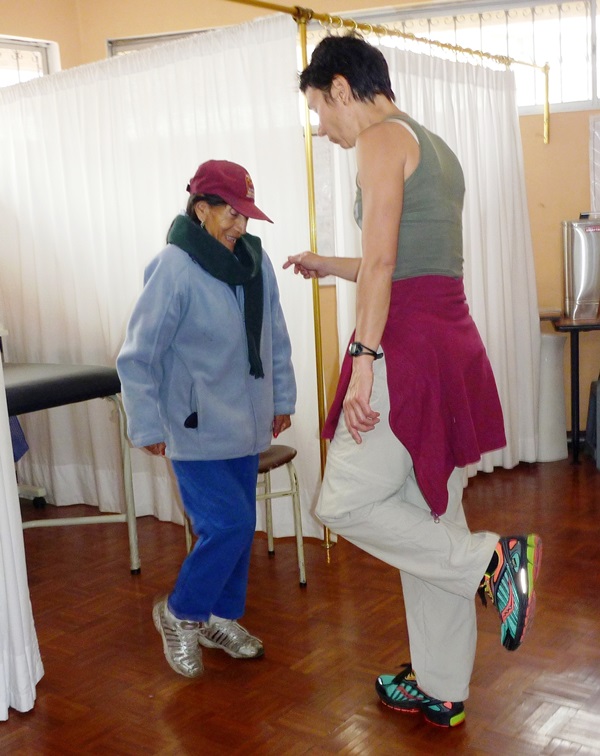
Another issue is the health of the Abuelitos and although there is a doctor coming 2x/week, many other issues remain unsolved. Mariana was pushed in the street a few months ago by what she called “an ugly thug”; she broke her wrist and hit her head and shoulder. Her wrist is still very painful, the whole arm is weak and her balance is very poor. She was happy to receive some help
Explaining to Mariana why we have to stop…although she likes this!
and loves having “machines” on her wrist, was asking if she could have it on for an hour! She must have thought me crazy to ask her to stand on one leg but eventually humoured me – because I am “very tall” and if I can stand on one leg, so can she!
To stand..or not to stand?
A few other residents could use help, but it takes some time to identify them as they do not come to the center on a daily basis. Hopefully, word will spread and they will tell us how we can help…or not.
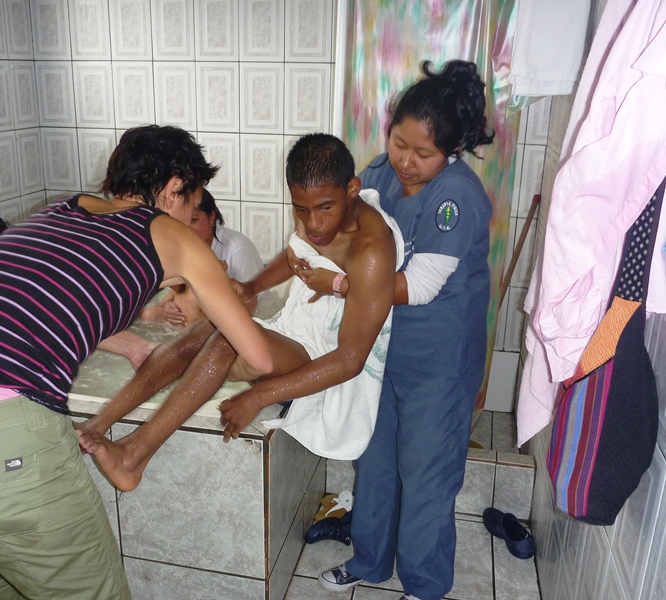
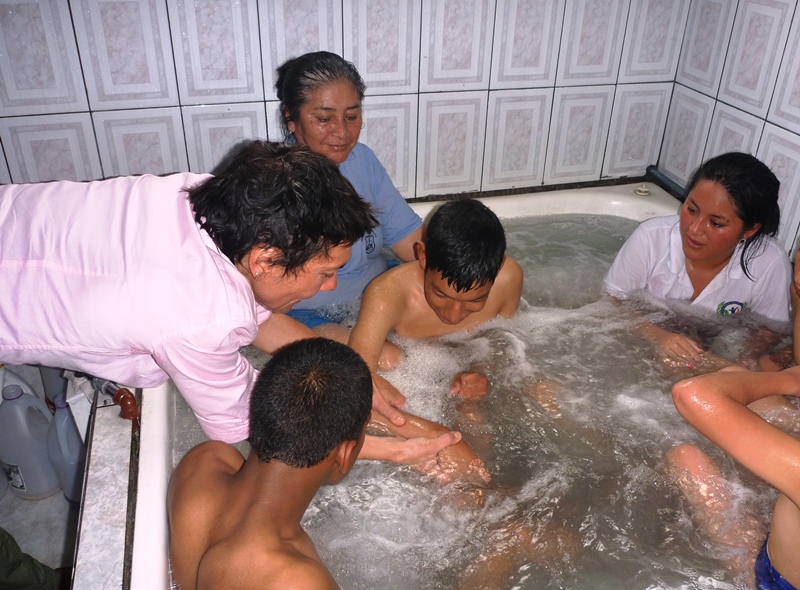
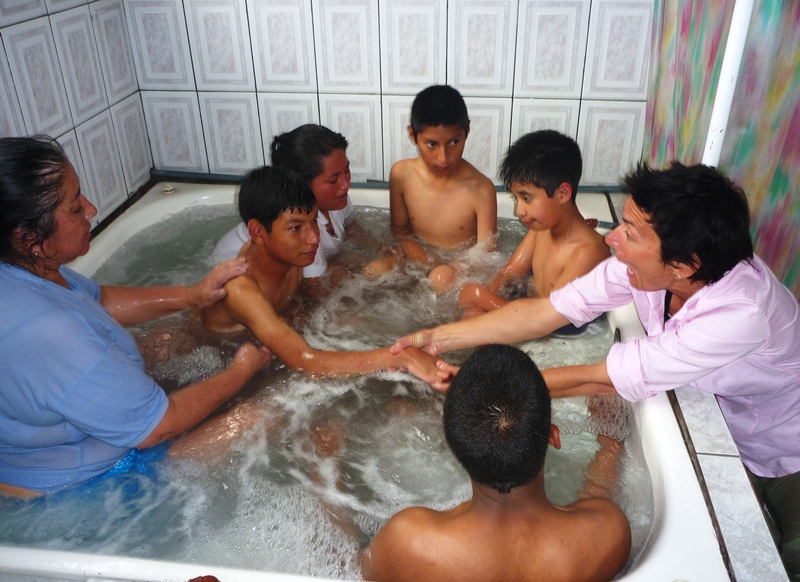
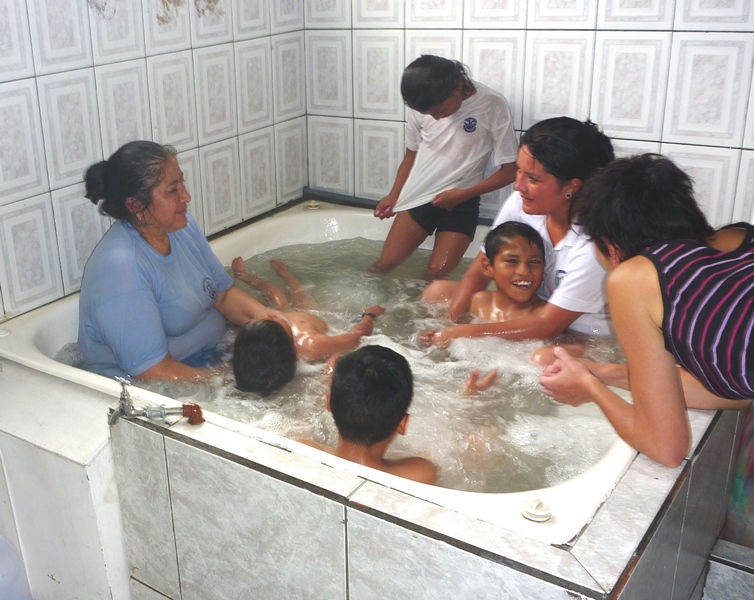
INSFIDIM (Instituto Fiscal de Discapacidad Motriz) is a rehabilitation center for children with various physical and cognitive disabilities. Established in Quito in 1998 it has continued to grow thanks to a mixture of governmental assistance and private help. Peter volunteered here last year and also helped provide the needed chemicals to maintain the small pool for hydrotherapy; we have returned to visit and help the children and the very friendly and incredibly dedicated staff. This year, the roof was in bad need of repairs – some of the classrooms turned into marshes regularly ( daily downpours are typical for Quito). Abrazos has supported the purchase of materials for roof and floor repairs – the work was done during 1 week of holidays in February and the finishing touches are being applied now (more to follow!). Monday is hydrotherapy session – the favorite of many children, particularly those with very severe spasticity.
In and out of the pool with helpers
The staff is welcoming and quite willing to learn new techniques, as manual physiotherapy is not well known here. Tough to explain it all
Gentle stretches to release a tight hand
in Spanish but…we manage somehow to communicate and accomplish something. Lots of stretching and exercises but also splashing around in the warm bubbles, just for fun and relaxation.



















 abrazoscanada