All posts by abrazoscanada

Pina Palmera 2016

Peter is the one traveling this year (sigh!) so  this story is about Pina Palmera  and his latest adventures:

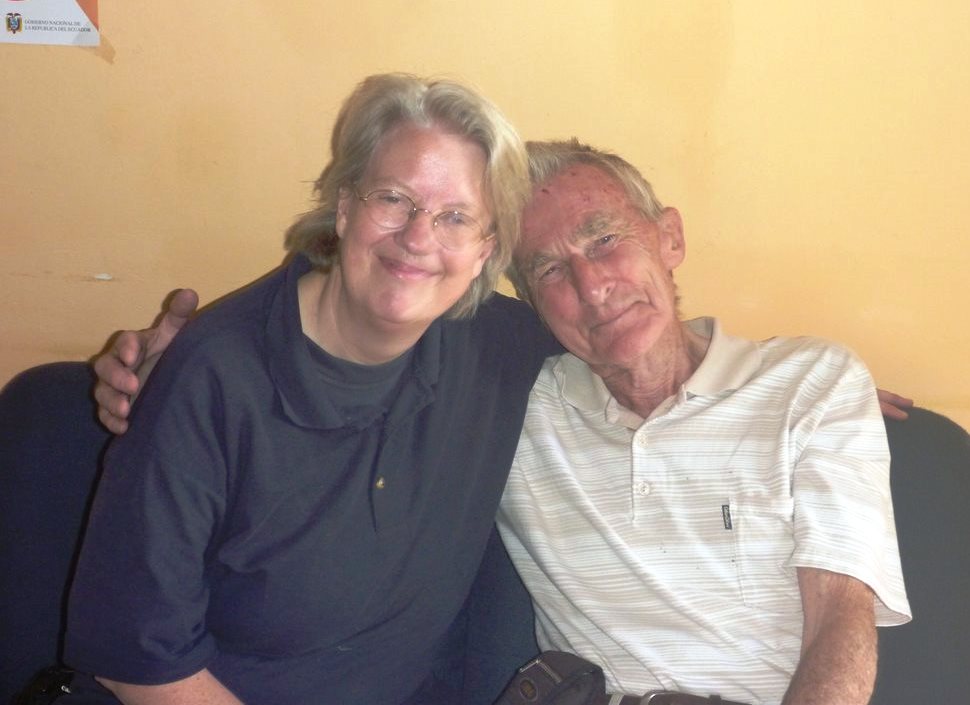
Zipolite at this time of the year is hot and dry. My usual routine was to enjoy the cool morning by getting up between 4 am and 5am to do some writing such as this report, have breakfast and then go for a walk on the beach before going to Piña Palmera. Others have the same idea and one sees an eclectic mix of the young and the old, clothed and unclothed,  a few fishermen and a few swimming. There is a dangerous undertow most of the time and most that go in to the sea do not venture out of their depth.  Because this is my last official visit to México and to PIÑA PALMERA it seems appropriate to provide a brief summary of how ABRAZOS CANADA and PIÑA PALMERA became connected.

The story begins in February 2009 when Mona and I first visited México. We went to Coyotitlán, a small village in the state of Sinaloa in  north western México. We went there to spend sometime with an organization known as PROJIMO and founded by David Werner, a U.S. citizen whom we met and with whom we became friends. During our stay we started to learn Spanish and at the same time worked with the organization, Mona applying her skills as a physiotherapist and myself as a helper. It was an interesting introduction to México and to the world of volunteering and it also indicated to us that our aims, still vague and ill-defined, would be better served if we were to start our own organization. After we returned to Canada we looked for organizations that provided support for the disabled and disadvantaged, in particular children. PIÑA PALMERA located in the state of Oaxaca seemed like an organization with whom we could work. Later in 2009 I went back to México, and travelled to Zipolite, a small village on the Pacific Coast of the state of Oaxaca where PIÑA  has its base. My visit of a month or so gave me an opportunity to get to know the organization and its people, including  Sofia Wolfbrandt a physiotherapist from Sweden who took me under her wing, making sure that I understood what was going on and who was who in the organization. Later, Mona met Sofia and the two became soul mates. Since the first visit, one or both of us has visited PIÑA PALMERA annually and ABRAZOS CANADA has established a partnership with the organization that is providing financial support for regular visits to the communities of two teams: One lead by Sofia that provides health care for disabled children, and the other lead by two deaf teachers that provides support for deaf children and their families.

PIÑA PALMERA  welcomes many volunteers from around the World. Some come as volunteers while others in the health field come to receive a formal introduction to Community Based Rehabilitation, a program of integrated self support for communities that has largely been developed by the organization and for which it is now recognized world wide.  ABRAZOS  has been instrumental in connecting the University of Ottawa with PIÑA  and this connection has enabled Canadian students to come to México for a part of their practical training.

Malena’s wheel chairPina162. Malena is a woman in her late thirties, severely disabled, who came to PIÑA PALMERA as a child after her mother died. This has been her home, where she is well cared for and where her infectious laughter brightens the day. Last year ABRAZOS CANADA received a request from  Sofia for funds for a new wheel chair for Malena. It did not take us long to comply with the request and it does illustrate one of the strengths of our organization, namely the ability to respond quickly and efficiently to valid requests.

Because this is the holiday season, with many of the volunteers away, and with no community visits scheduled I was wondering if this visit for me would be somewhat one of sitting and looking at the ocean. Nothing was further from the truth as within a day or so of my arrival I became the organization’s carpenter with the first job to make a table for the new chair. Malenna was very particular as to how it should be and I could tease her by pretending to be exasperated at all the changes needed.

Small requests were dealt with, a chopping block for Danielle the potter, and palas, wooden shovels for the Pizzaria.

Sofia then approached me and asked if it would be possible to make a set of steps that could be used in her therapy sessions to enable children and adults to gain experience and confidence in dealing with obstacles.
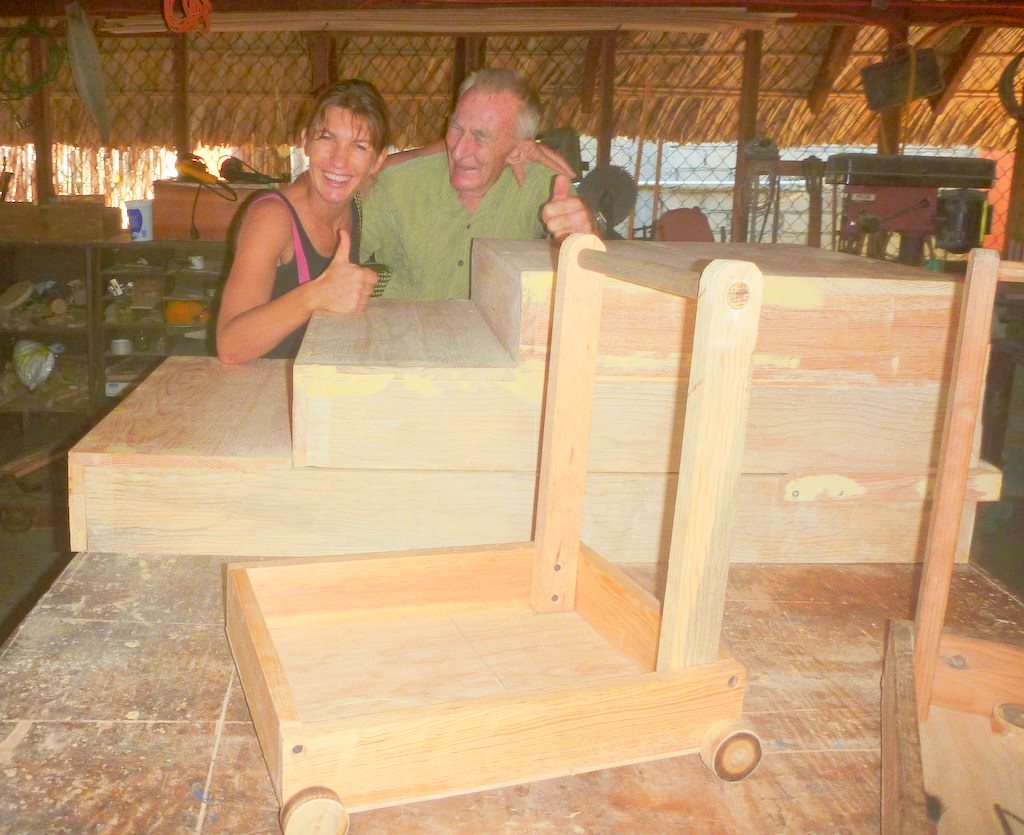
Carpenter at work!
Carpenter at work!

It was a fun project, helped at times by Lisa, 8 years old, Sofia and Al’s oldest daughter. The final week was spent in making two small push carts for Sofia to use in her therapy sessions. Working in the carpenter’s shop has been a great way to spend the time of my final visit.

 

Final steps – home visits

P1000622Before I left, I had the opportunity to go on several home visits with the Pina Palmera team. As usual I am impressed by the persistence of the staff: searching diligently for homes hidden in remote areas with poor access and few landmarks for guidance. There is no actual address; usually one asks around for: ”would you know where Maria’s mother’s house is?” and hopes for accurate information.

Hibiscus at its bet!

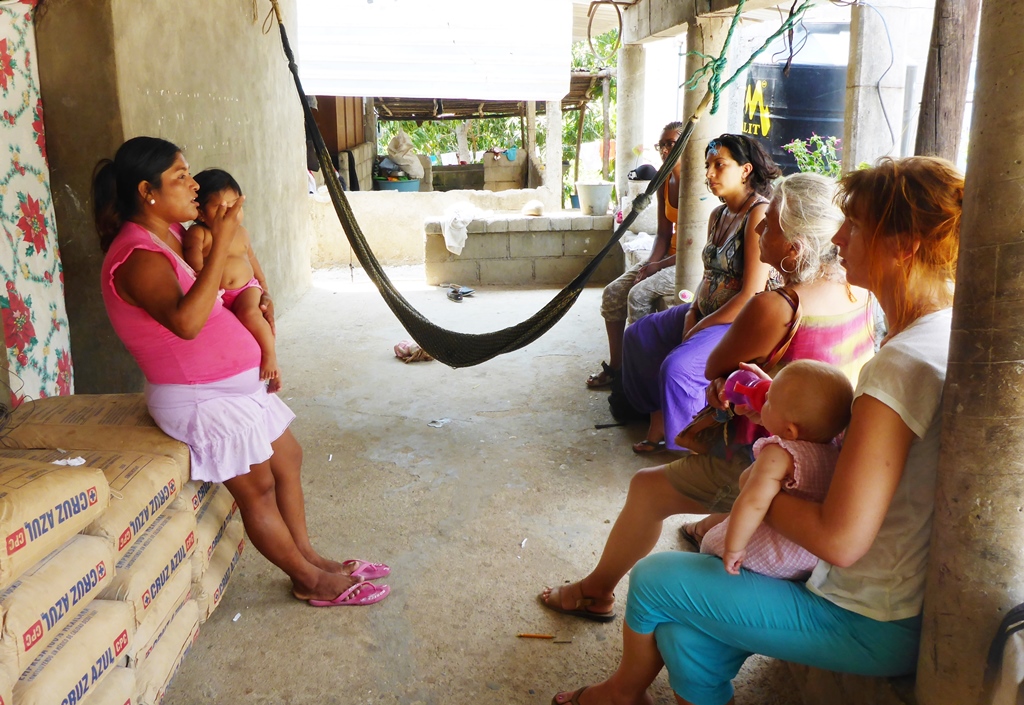
The reason for visiting today is to see why the children and parents have not participated in the regular therapy sessions at Pina. It is difficult for most people to reach the therapy center: distance and money are usually the biggest impediment to access and regular participation. However, the parents may have to work, the mothers become pregnant again, the grandparents are sick or die, but worst of all the family decides that therapy is not necessary. The Pina team continually educates families about the need to continue with regular sessions, whether it is about teaching the deaf children sign language or therapy for the toddlers with developmental delays.

Explaining and educating...it never ends
Explaining and educating…it never ends

These discussions also enable the team to find out if the families need different kinds of help such as paperwork for school registration of the youngest child or medical assistance for a family member; many times there are issues that the Pina staff can help with.

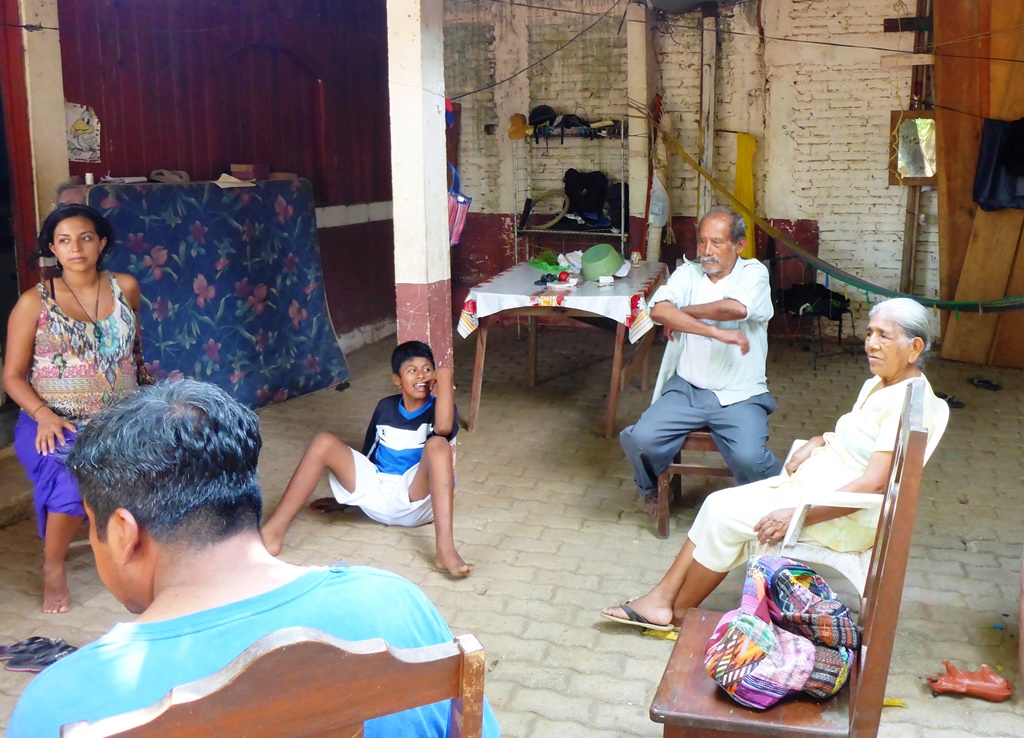
Working through complex family problems

The families of disabled children are dealing with significant stress and this leads to frequent conflicts between family members.Today, a long talk with the father and grandparents of a young boy with developmental issues helped plan a strategy for hyperactivity and frustration outbursts.

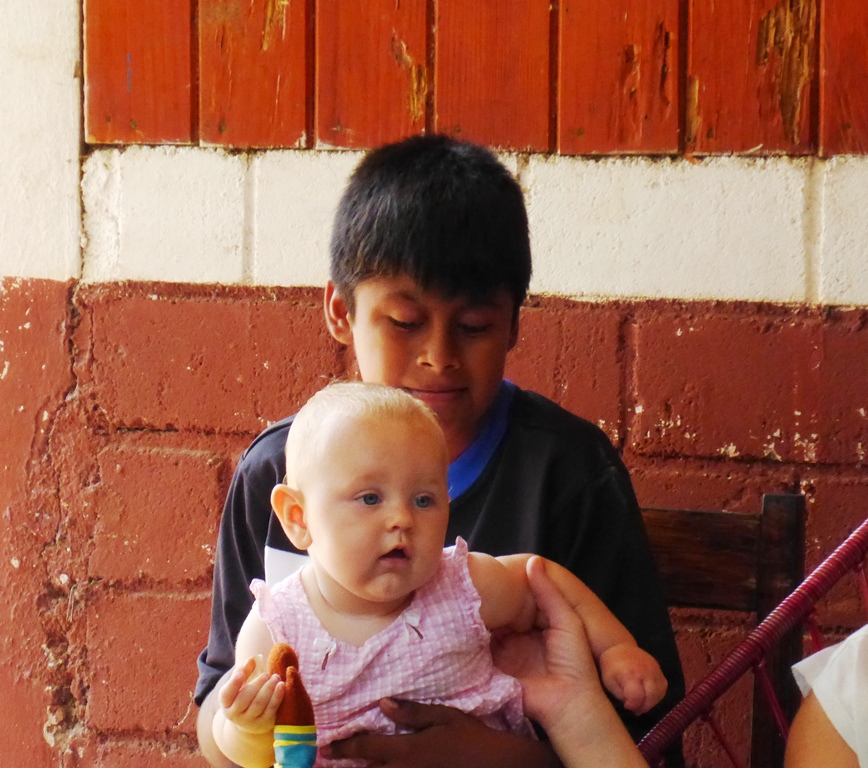
Who else wants to hold the baby?

Luckily Sofia’s youngest daughter steals the show and helps break the ice – everyone wants to play with the chubby, smiling baby and soon the discussion flows smoothly into child care issues and parents share their concerns wit more ease.

After a long and very hot day on the road, our small group returns home tired but happy with its accomplishments – all 4 families targeted today have been found, visited and encouraged to take another step in the long, difficult journey towards health and better quality of life.

Finally, walking downhill on the road back home!

Perhaps the team will have to return one more time, perhaps the parents will resume their trips to Pina – who knows?  One thing is certain though: the team is not ready to give up and every child’s health and education is worth fighting for.As usual, I am impressed and humbled by their efforts and have  a deeper understanding about the effort required to provide support and access to health care  when environment and infrastructure are so unfriendly.

P1000635

Back to Pina Palmera

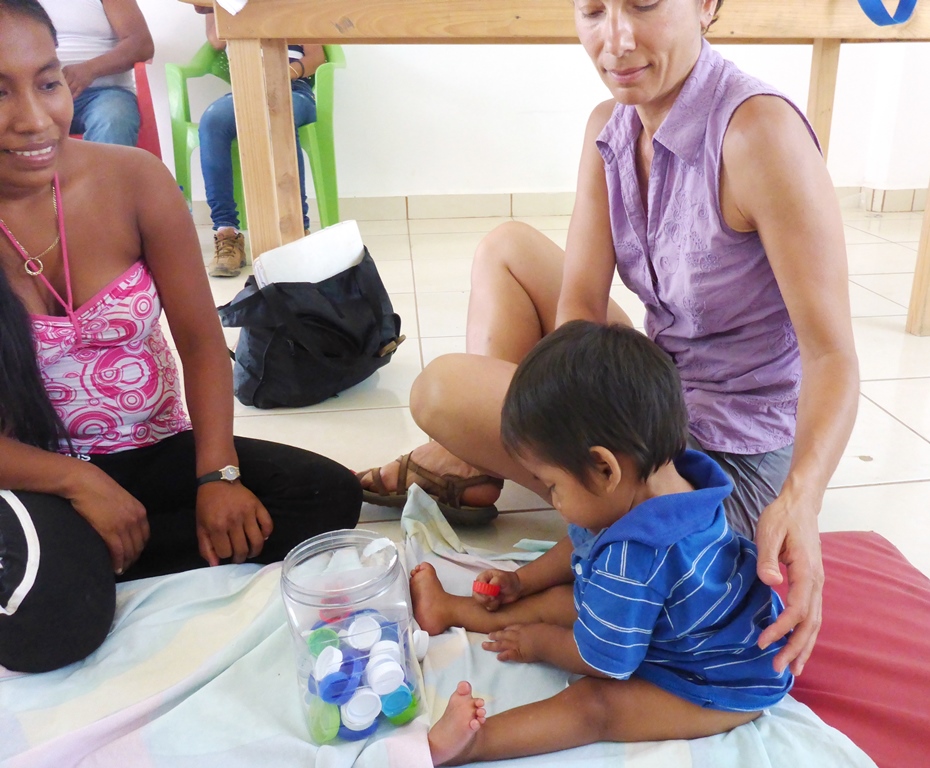
I have now come to the endpoint of my travels – Zipolite and the hard working team of Pina Palmera. The community visits are running at full steam even though the recent change to the Daylight Savings Time (a few days ago in Mexico) has confused most of the attendants. P1000535People come in groups, some thinking it is 10 am others opt for 11 am – almost everyone lives without a clock or a watch and they run the day based on the amount of daylight, not on some convention of hours and minutes. Nevertheless, it is full house again: parents, relatives, children with various disabilities. P1000498Lessons for the deaf with Miriam, games and discussions with Mariana and the physical therapy corner with Sofia.  I am able to help a bit and am trying to befriend a little indigenous boy with spina bifida while also trying to teach his mother how to help him improve his balance.

Working hard at sitting balance

Pina teaches acceptance of the disabled but I must say acceptance works both ways: I am surprised to see how fast the little one becomes engage in play with me – a foreign face that first made him cry and hide in mother’s lap.

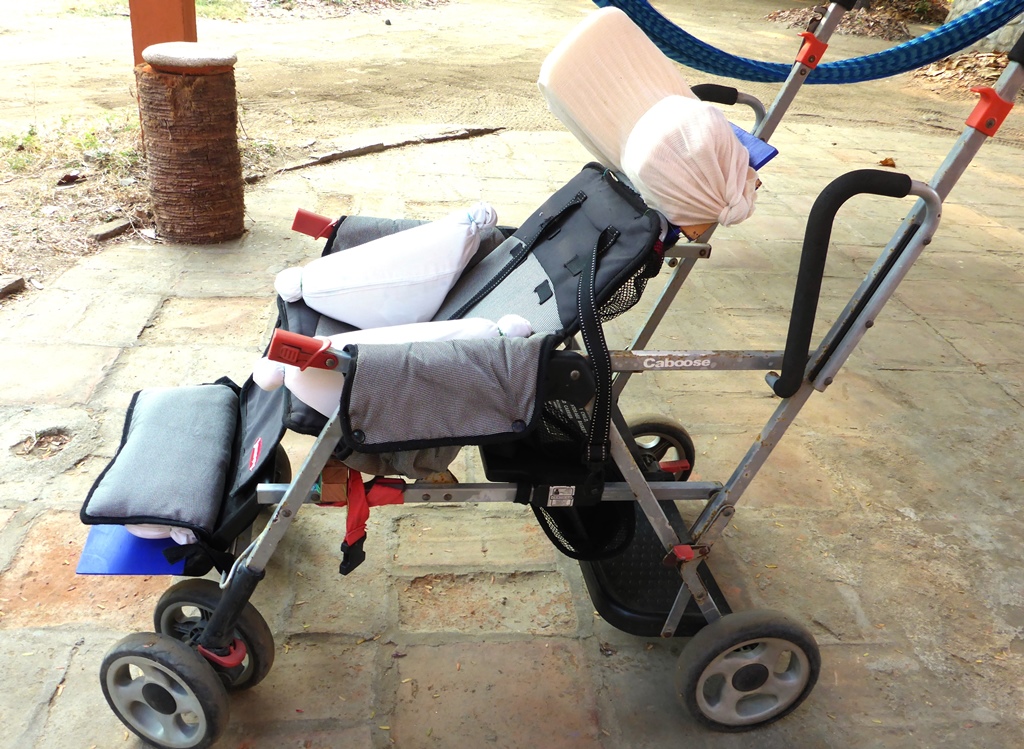
This year the Canadian occupational therapy students are again present in full force. The 2 students form Ottawa have managed to  transform an old baby stroller into a much needed wheelchair for 7year old Pablo. Handling the uneven Mexican terrain is no simple matter and most wheelchairs fall apart fast.

Baby-stroller-wheelchair-contraption

Not only are wheelchairs impossible to purchase by most families, they are bulky and too fragile for this environment. However, this innovative version will allow the mother a bit of freedom – not an easy task to carry around a 7year old! – and enable Pablo to explore his surroundings with better posture and more independence.P1000494
A quick dash through Oaxaca

Back in the noisy dusty city where the loudspeakers on the propane selling truck competes with the one on the water selling truck and they all compete with the  never-sleeping knife sharpeners, scrap iron collectors, fruit selling trucks but most of all  with the tamale vendors – who would not want to buy tamales at 1 am?P1000431

A short visit to Hijos de la Luna (children of the Moon) informs me that the 45 children are all in good health. P1000406There is only one baby (6 months old), about 10 under the age of 6, but Coco seems to have it all in good order, as usual. As soon as I come I am handed the baby with the express request to feed him while we have our chat. Trying to juggle baby, spoon and carrot mash, I ask her about the general state of things – kids are happy and even though for a newcomer the environment is very chaotic I can see they are all sitting down for dinner in an orderly fashion, each bringing his spoon and cup to the table.  The older ones bring their own plates form the kitchen while the little ones are bring served by a volunteer.  Coco and I have a few minutes to chat before the food is devoured and calls for cookies arise from everywhere.P1000420 I pass a carrot-smeared baby to another volunteer and proceed to dispense cookies as the rules dictate, to those who have emptied the plate and are sitting nicely in their chairs. Hard not to break the rules with all those smiling faces and reaching hands!

The visit at the Procasa Hogar del Nino (the home for boys) was very brief since al the boys had gone for a day of religious events due to the ongoing Easter celebrations. Religious processions are flooding the city streets and the churches have free lunches for the poor and the orphans. The priest in charge of the boy’s home has also promised a week at the beach for children from 3 orphanages but unfortunately the bus destined to take tem has collapsed a few days ago and is beyond repair.  Rosa Alba, the administrator and myself have an upsetting day, trying to find other ways to transport 60 children to their only vacation and for some the only outing they ever experience. P1000433Eventually our legwork pays off:  we find a willing company that is also offering a reasonable price for 2 smaller buses that will fit children, caregivers and luggage. Our happiness lasts 2 hours – the priest in his wisdom decides it is after all too much trouble and why would he accept the support of a donation when they can do with whatever they have? Rosa Alba is speechless. I choose to keep my mouth shut and focus on my rising blood pressure. Happy Easter everyone!

Tonala revisited – back to the eldery

The previous story about the abandoned elderly of Tonala continues – as does our support of them. Apart from the monthly food packages, we are looking for ways to make their lives a bit easier and more dignified. Karen has been tirelessly working at finding additional support and has enlisted the help of a university student to create a short promotional video for a fundraiser.

Video preparations!
Video preparations!

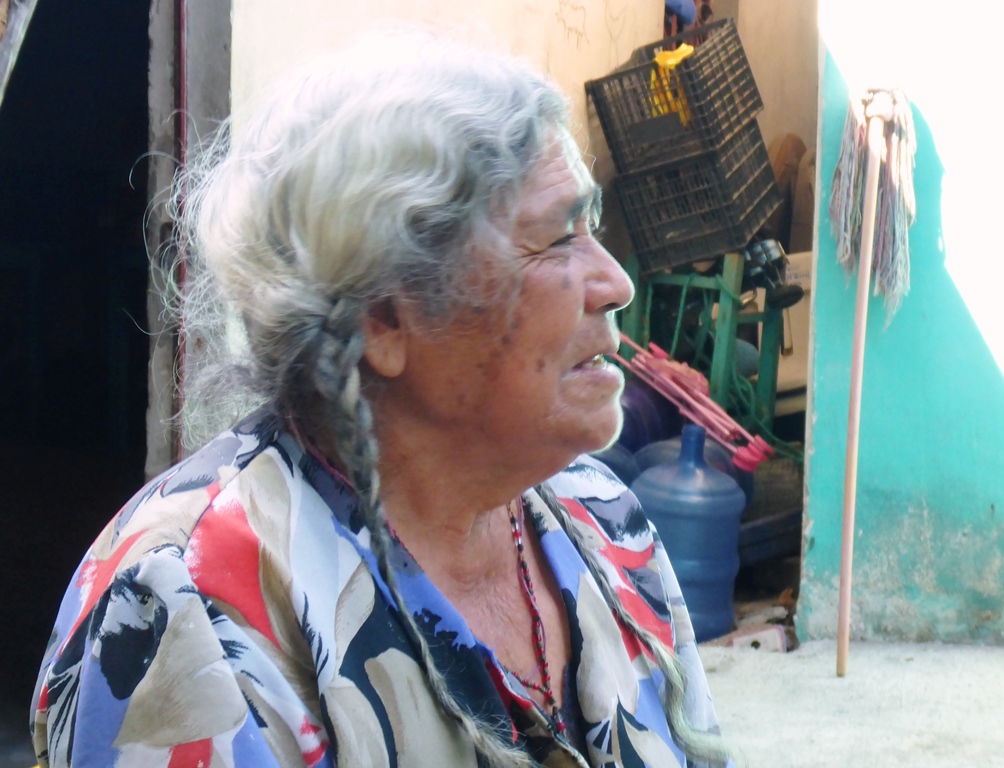
The interviews with the elderly are eye opening – they talk about their life before receiving any help and it is a story of depression and hopelessness. Not only does the monthly food package allow them to eat better and save a little of their meagre pension, but the activities run weekly in the rented space that Karen has secured, add a new dimension to their life. They now smile and chat and have a sense of belonging, of human connection. The activities represent a reason to walk daily and interact with the world that until recently was hostile and full of peril. No one is kind to these people or treats them with respect. Until recently they were discarded and abused.

Sharing one's life story!
Sharing one’s life story!

Having a place to come and play games, laugh, share a joke is unbelievable – as one woman told us “I have worked since I was a little girl, then I got married. We lived far from the village, on a hill; I never knew what it meant to play”. Another man said: “I used to only think about death. Now I am laughing again” – he ends, with a huge, happy, toothless smile!P1000453

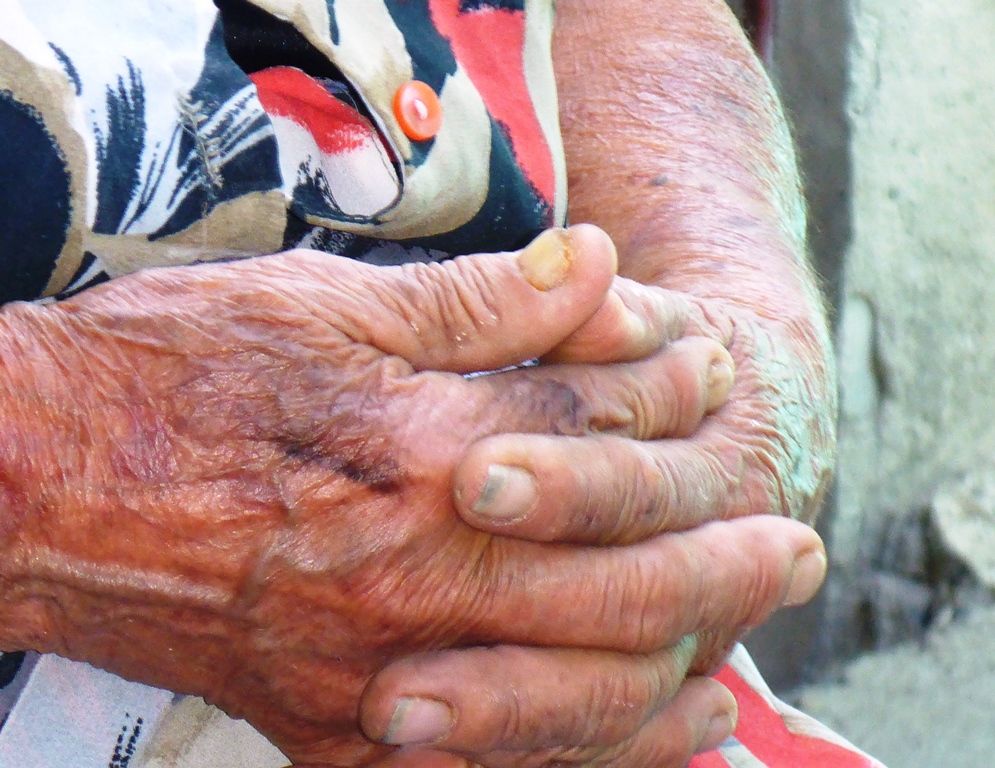
On my visit I could not do much beyond talk about some of their many health care issues and offer basic preventative suggestions and education. All have high blood pressure, some have diabetes and the food package can only be tailored so much to help with their health issues. Osteoporosis and arthritis are deforming and disabling their joints. Health care comes in the form of a weekly (at best) visit from a doctor: he arrives at the village’s health clinic, writes prescriptions and shrugs his shoulders. There should be free medication available but there is none.  To pay for the prescription requires at least 10% of the monthly income…which most are not receiving due to some obscure administrative issues that no one can explain, let alone resolve.

Knee pin, joint pain....
Knee pin, joint pain….

All I can do is offer some anti-inflammatory creams, demonstrate basic exercises, and suggest simple joint care methods.  I know they are happy for the attention and some remember things I have said last year, much to my surprise. We share hugs and best wishes, the human connection they are so deprived of. If only it would last, if only it would change their life a little…..

Madre Tierra – Mother Earth

A quick visit to the southern part of the Chiapas province was required to visit the Health Centre in El Triunfo – a small community where the indigenous population struggles with poverty and marginalization.

Entrance to the health centre
Entrance to the health center

Thanks to the work of a Swiss-Mexican organization named Madre Tierra, this area has been receiving support and a new health center was built 2 years ago. Julio and Helena – founders and leaders of Madre Tierra, passionate social activists and one of the most devoted couples I have ever met, have struggled for years to help the poor in this area.

A brand new building!

The center’s “heart” consists of numerous health care promoters recruited form the local population (people who go the small and remote communities and provide education regarding water hygiene, disease prevention and rights to health care), 2 physicians and 1 dentist, recruited from the capital of the country, 1 laboratory technician and one midwife. The group is enthusiastic and proud of the work they are doing. This is an area of virtually no medical service except the occasional visits by a “traveling physician”. This is common to most of the Mexican rural areas – in the official health center; a physician appears once a week or once a month …or even less. He or she consults patients and prescribes medications.  Some drugs are given for free for those who can’t afford them but that are usually the exception – most of the times patients are responsible for paying for their prescriptions and that can mean up to 50% of their monthly income spent on one or two essential medications. Laboratory testing happens seldom – most can’t afford the cost of the transportation to the nearest lab, not to mention the actual testing.

Clean and bright...and luckily empty today!
Clean and bright…and luckily empty today!

Having a Centro de Salud endowed with its own lab makes the attending physician, Miriam,  extremely happy. “I don’t have to wait for days for results that may never come” she says. She tells me that most of her patients are diabetic or blood pressure emergencies.  The rest arrive with severe trauma resulting from work accidents (deep cuts followed by severe blood loss and infection, fractures, occasional snake bites). There is no ambulance service, there are few cars available (and most people are too poor to pay for the gas) and the nearest hospital is hours away.  I am in awe of this young female physician who defies all medical and societal barriers! We start a conversation about education and prevention, planning a workshop  directed at educating mothers about proper child stimulation and mobility (since most children are tightly swaddled and ignored until they become too heavy to be carried, resulting in severe developmental delays).

My new doctor-friend Miriam!

Miriam has already allotted me a small sleeping space(most staff sleeps on the premises since the center runs 24 hours/day) and plans another workshop on disability and rehabilitation marathon….I am totally sold and it is only with the deepest regret that I return to reality and realize I cannot stay…at least not this time!.

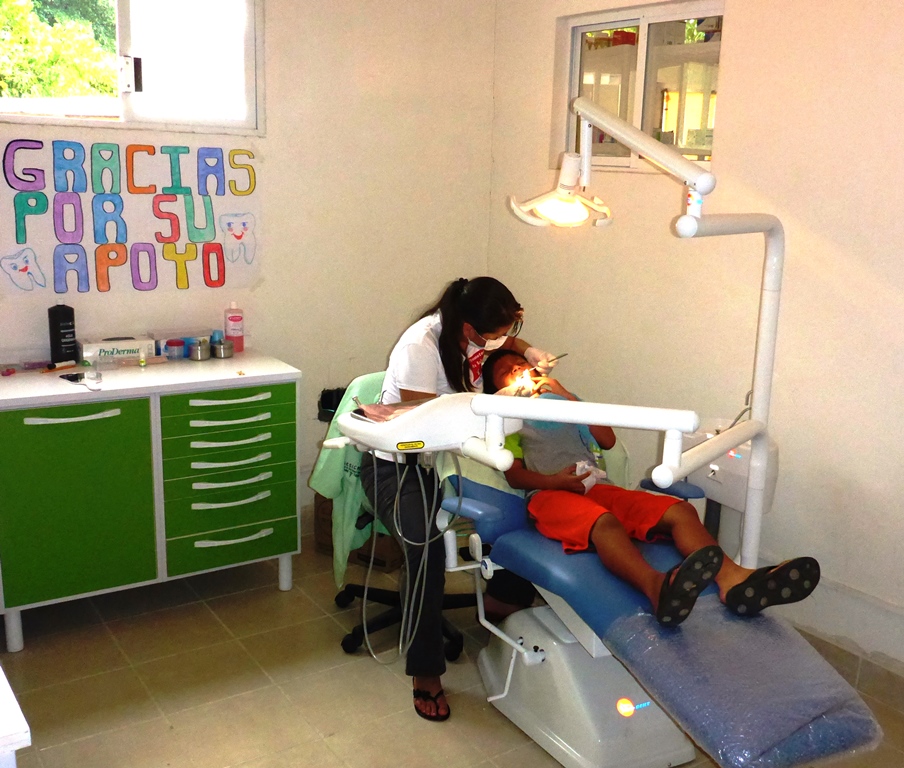
ABRAZOS has helped fund a portion of the salary of the dentist – a lovely woman who ropes every child she can find into a dental hygiene session. She is not too hopeful about the adults – years of neglect have resulted in severe loss of teeth – but she frowns and in a determined voice she says: “Well, we do what we can but it is slow!” The unhappy face of her current patient reminds me of the reluctance we all have when we have to pay a visit to the dentist.

Drilling?? ouch!
Drilling?? ouch!

At the same time it brings back pictures of mothers feeding their babies with bottles filled with commercial fruit juice – a frequent image on the streets of Mexican towns and villages. Poverty has many faces and some of them are not as obvious as we think

A safe place for children

The most difficult part of my journey was visiting Casa de las Flores in San Cristobal. It’s a daytime safe house for the “children of the streets” – not necessarily orphans or homeless children but young ones who spend their day selling trinkets, polishing shoes, begging, singing, etc. They do not have much of a childhood – no school but also no food, no play, no kindness or affection. Their ages range widely – basically as soon as they can walk around town they are being put to work. The little ones still have a smile and a wave of their hand but if fades fast. They learn that not selling anything results in beatings and starvation. The older ones will be abused sexually, physically; mentally – human trafficking is doing quite well in this area.

The vistas of San Cristobal

Claudia is the woman who started the shelter. Of course, for safety reasons neither full names nor addresses will appear on this page. She has dedicated many years to creating a place where any child can come and rest, eat, have some peace from the constant incredible stress he or she is facing. Later she added games – something totally unknown by most – and a shower so that once a week street dirt, lice and fleas can be at least threatened if not eliminated. In the last years, 2 more people have decided to help as educators, trying to teach reading and some basic arithmetic but mostly struggling with health education, human rights, and protection from abuse and so on.

The worst part is the helplessness – children come a few times and then disappear forever. Or they call from a cell phone telling Claudia they have been kidnapped but have no clue where they are. Or they are beaten by their parent and forbidden to return to Casa de las Flores and Claudia must watch them selling braided bracelets to tourists, fully knowing they have not had anything to eat in days.

Both AFCB and Abrazos have in the past supported the food costs and some other minor projects. It is but a small drop in the ocean and we do not know what else can be done to help, since many children are unable to come regularly for breakfast or lunch.

Elusive education
Elusive education

One day, walking through the city, I offered buns to each encountered child. Not a single one refused me. I felt more useless than ever and this part of my journey continues to bring up a lot of deep sadness and anger.

Communities in Chiapas

Time to let Peter go back to Canada and have Mona continue with the travels and  stories.

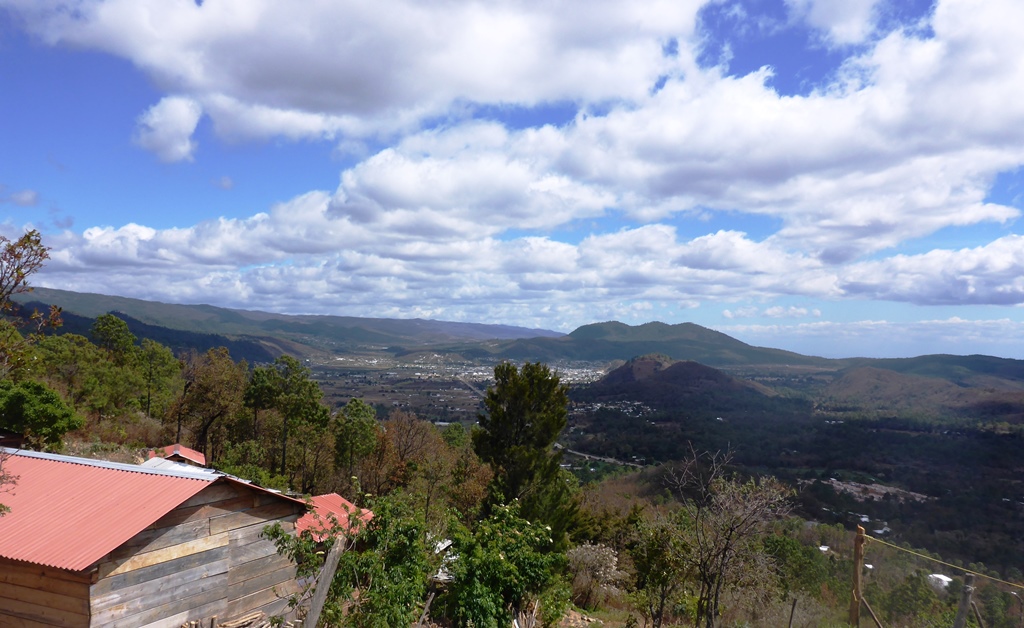
One of the earlier postings in this blog talked about Arthur Frederick Community builders and the work done by Paul and Diane Poirier in the province of Chiapas over the years. Since AFCB and Abrazos Canada are closely cooperating, I had to go and see for myself what was happening. Chiapas is a different Mexico altogether – or so it felt to me. The mountains in the San Cristobal area are green and beautiful: pines, cacti, tropical trees and incredibly beautiful flowers, all growing together.

the amazing mountains of Chiapas

A mixture of laden avocado trees compete for attention with the wild peach trees currently in bloom. The soil is fertile, the rain generous and the people hardworking.

Unfortunately the poverty is shocking for such a rich province. Unfair work practices leading to extreme exploitation of the population (particularly the indigenous people) combine with heavy deforestation to make room for agriculture and ranching. The factors leading to poverty are many and this space is inadequate to discuss them. The one problem AFCB is trying to address is the lack of healthy housing and access to education that only compounds the problems faced by the communities. Buildings are made of wooden boards, covered on the inside with plastic and paper to keep the wind out. The rain enters happily through every crack and of course under the bottom boards creating interior rivulets.

Floor patterns after rain

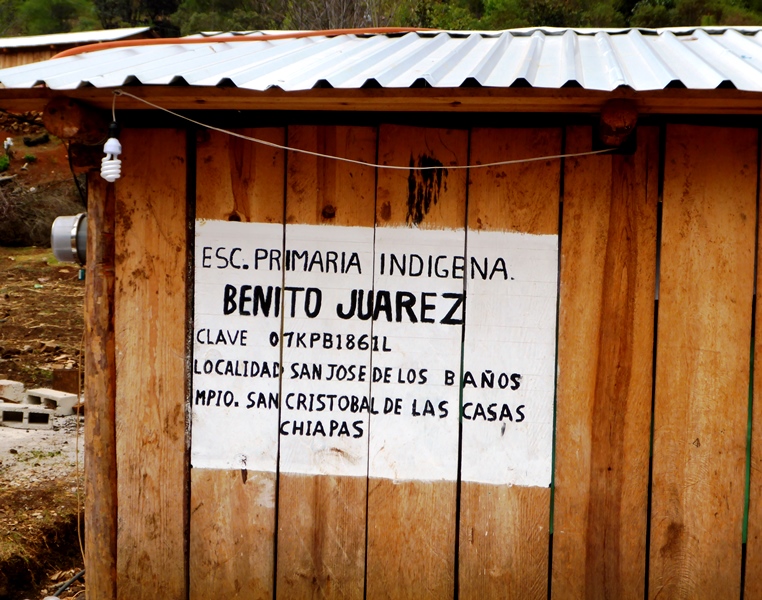
The only sources of heat are open fires, also used for all the cooking required to support the family. As recounted in the previous blog, AFCB focused in the past year on building houses for the poorest of the poor, while at the same time reinforcing the ties and support given by community members to those in need. (see our past page about AFCB ) The houses are small cement rectangles but are endowed with a solid roof and strong support pillars that are buried into the ground – after all this area is prone to earthquakes. If funding permits, small details are added to the doors and windows, helping the owners dream about colorful paint or other pretty elements they will eventually add to their home. Another problem are the schools and preschools. Remote communities either do not have one (and children need to walk for miles to attend school) or have a most insalubrious shack housing all children between the ages of 6 and 10 …or more.

Welcome to school!
Welcome to school!

Only children who have attended preschool are allowed to register for grade 1 – but what happens if there is no preschool because the local authorities have deemed there are not enough children to warrant building one? AFCB has decided to help build either a small preschool room adjacent to an existing school or a new building altogether in the places where no school is in existence.

the one (and only ) classroom of the school

What do the recipients say? They are proud people and want to participate in every aspect of the decision making process as well as the actual building. Men donate their spare time and walls are erected during weekends and evenings. All work must be finished before Paul’s departure for Canada. The women will tell us that they never dreamt of having a house; they are having a hard time believing all this is happening.

With Paul, Sebastiana and her family

Sebastiana, probably in her 80s and almost 4ft tall, reaches up to hug us “giants” and tells me she is finally warm and dry. Proudly she offers fruit from her garden which we accept happily – an exchange of love and support between equals, no more and no less.

The blue door!
The blue door!

INSFIDIM – another year

 My last full week with INSFIDIM and time to start to say goodbye. It is Monday morning and assembly, the National Anthem sung with fervour if not complete harmony, announcements and admonitions and congratulations for birthday

Is this your backpack?

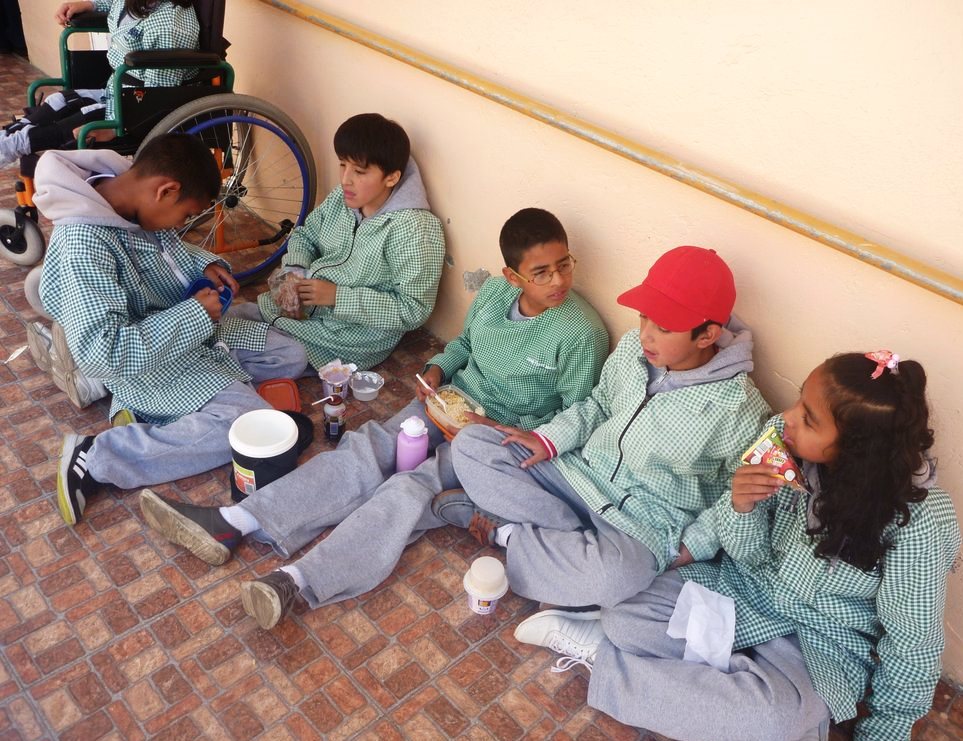
My class, taught with love and enthusiasm by SuzyCastro. Ten in all, different and all requiring indivividual attention. There is Dayana confined to her wheelchair and exhibiting extreme spasticity but always wanting to cut paper. Believe me having a spastic child using scissors requires one to maintain a high degree of concentration. Pamela, Jose, Jesús, Kevin & Patricia brother and sister, Ricky, Paul, Stalin and Emerson. All different but all are special. Of course the other classes have their complement of different and special children. At recess they come together to have their snacks, to greet a teacher with much affection, and to play. When playing somehow they forget their disabilities and enjoy the mayhem. 

Time for a snack
Time for a snack

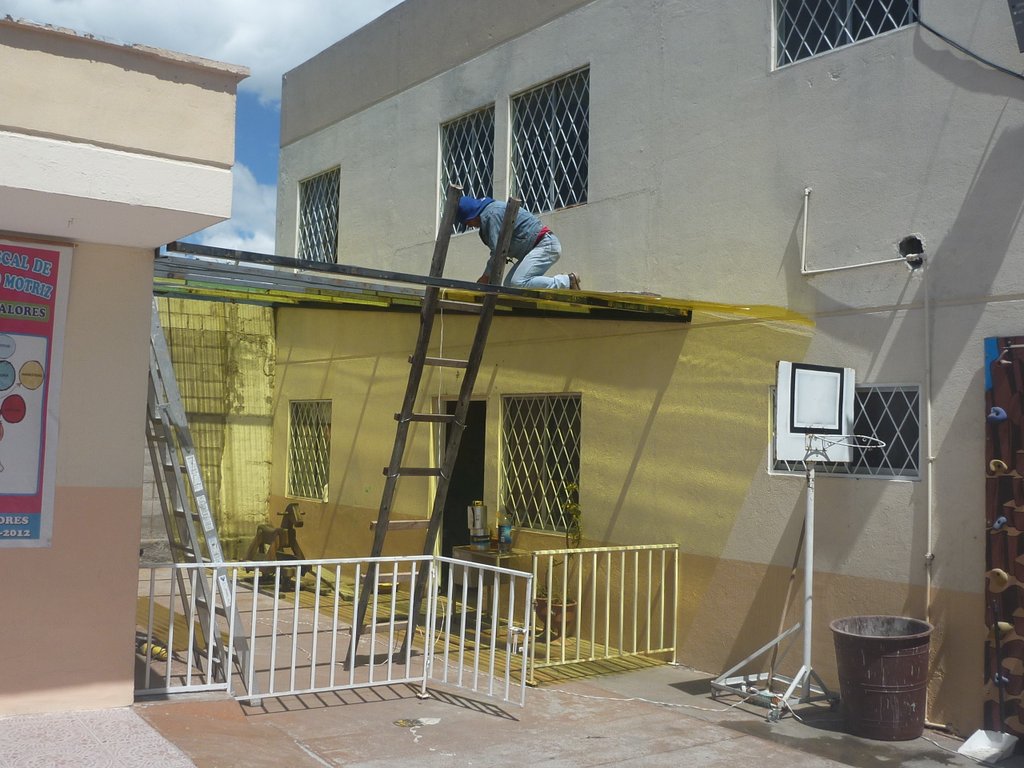
Each year, Abrazos Canada tries to help INSFIDIM by funding a project. This year the director, Marie requested that a new classroom be created to shelter the infants from the rain and sun, we are just south of the equator. Today the classroom has been completed much to the delight of the children and their teacher Lupita. 

Infants shelter construction

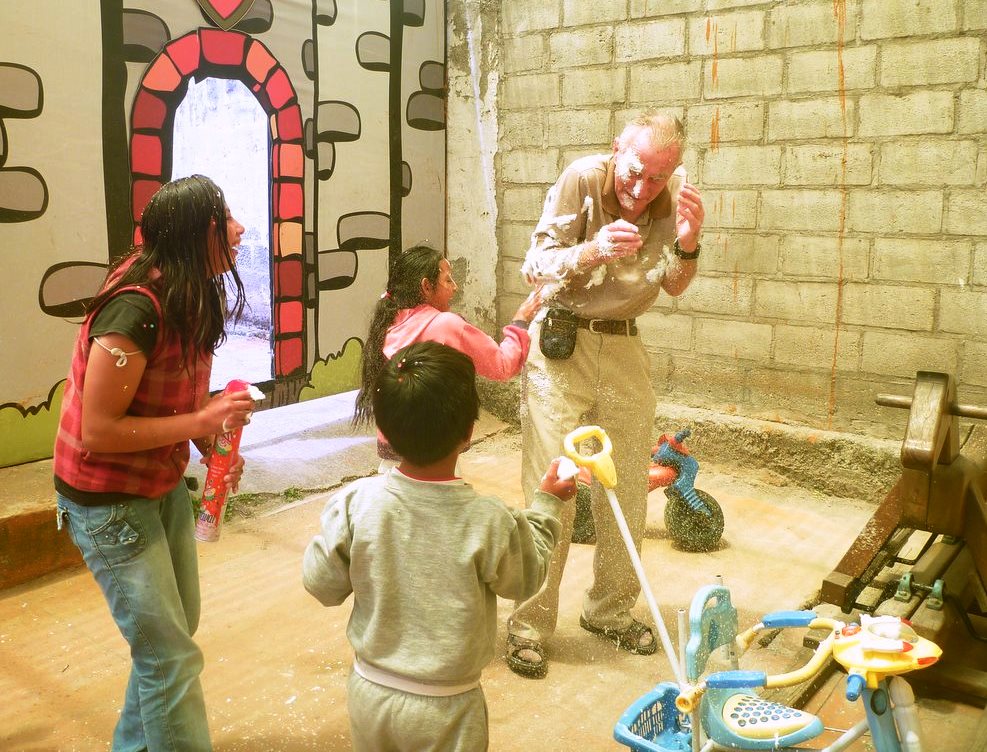
Last month, to celebrate the start of Carnival the school had a two week vacation. As is the custom during Carnival one gets sprayed or doused with water with one giving as good as one gets. The last day of school spray cans were in all hands and no one escaped. Of course the teachers and myself were prime targets. It was great fun. Farewell INSFIDIM Ojala! I will return next year.

Carnival! No one escapes the spray!


Happy Valentine’s Day…from Peter!

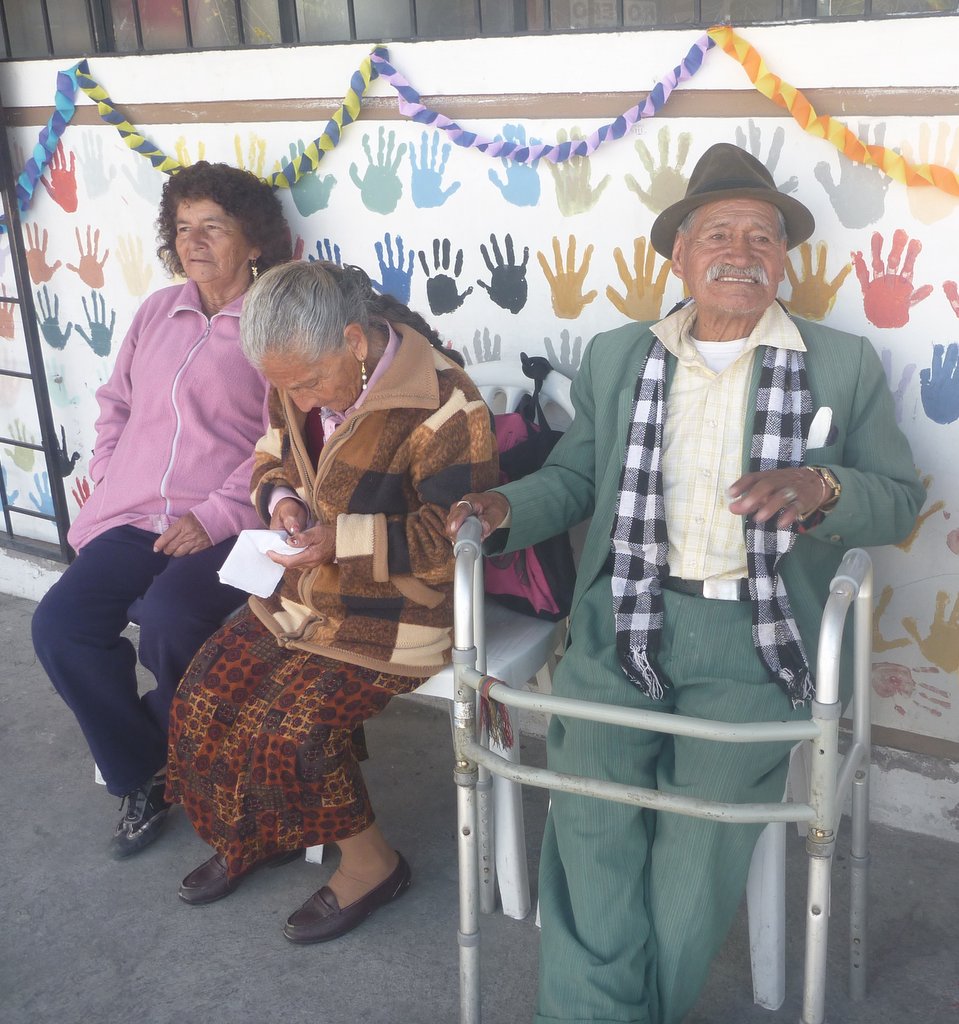
Ecuadorians love to celebrate and St. Valentine’s Day is no exception. The day before one sees on every street corner a vendedore of roses and balloons. This year, because St Valentine’s Day occurred on a day when the Abuelitos y Abuelitas de las Calles is closed, we celebrated the day on the Friday, some one hundred and fifty came to dance, to play games and to enjoy a chicken dinner, a rare treat for many.

Abuelitos Valentine
Abuelitos Valentine

During the year many volunteers, both local and foreign visit the centre, some visit just for a week, others for longer. This year I met Dr. Imke Krahle, a newly graduated doctor from Germany who spent six weeks at the centre where she put a lot of effort into organizing exercise programs, games and talks related to nutrition and hygiene.

Imke and her patien
Imke and her patien

Her ever present smile and her willingness to take time to listen to the elderly endeared her to all.

Every day when the centre is open a small snack and a lunch are served. The numbers served varies but for special occasions Josina de Witt allows for two hundred attendees. This year some one hundred and fifty came. A small kitchen, volunteer staff but it all comes together and all are fed. The stock response as one places the food on the table is “Dios se lo pague” God will repay you.

Josina and Peter - old friends!
Josina and Peter – old friends!

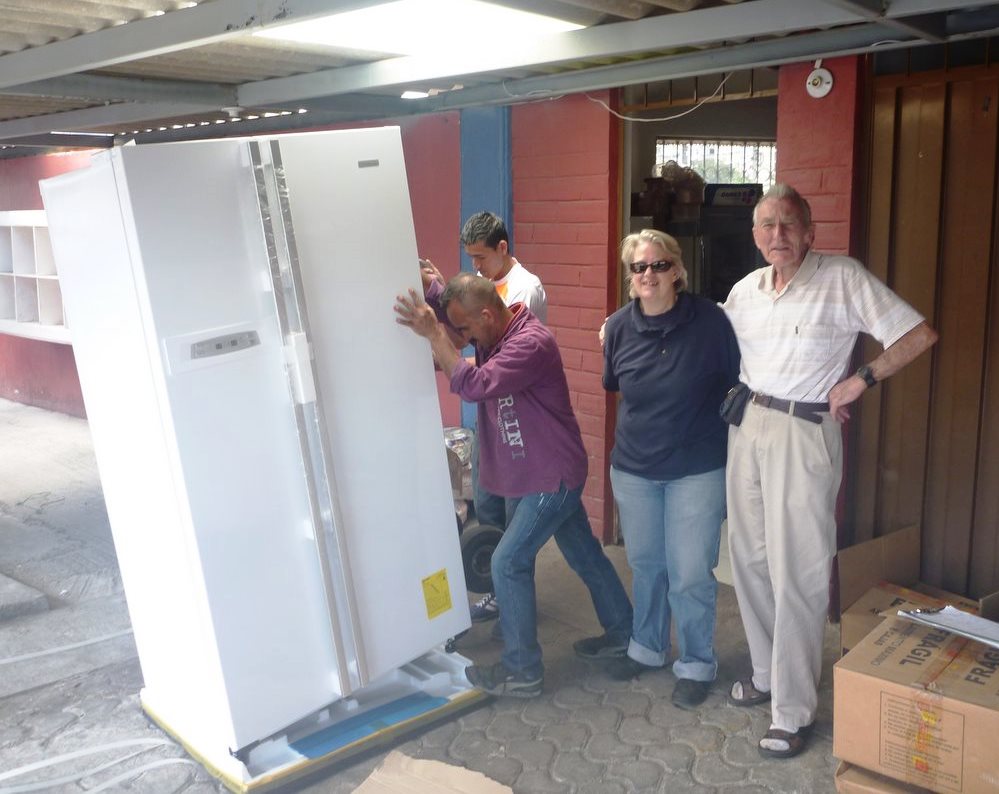
ABRAZOS CANADA has limited funds but we do have the advantage of being on the spot and able identify pressing needs where a small amount of money makes a difference. This has been the case at the centre where our funds helped to provide hot water for showers and a much needed freezer which very appropriately arrived on the day of celebration.

Th freezer arrives!
Th freezer arrives!

Those who come to the centre may be advanced in years but once the music starts the feet start to tap, the hands clap, and couples find themselves trying to hold a balloon head to head while maintaining the rhythm. Fortunately no one invited me to be a partner!

Dance and be merry!
Dance and be merry!