Madre Tierra – Mother Earth

A quick visit to the southern part of the Chiapas province was required to visit the Health Centre in El Triunfo – a small community where the indigenous population struggles with poverty and marginalization.

Entrance to the health centre
Entrance to the health center

Thanks to the work of a Swiss-Mexican organization named Madre Tierra, this area has been receiving support and a new health center was built 2 years ago. Julio and Helena – founders and leaders of Madre Tierra, passionate social activists and one of the most devoted couples I have ever met, have struggled for years to help the poor in this area.

A brand new building!

The center’s “heart” consists of numerous health care promoters recruited form the local population (people who go the small and remote communities and provide education regarding water hygiene, disease prevention and rights to health care), 2 physicians and 1 dentist, recruited from the capital of the country, 1 laboratory technician and one midwife. The group is enthusiastic and proud of the work they are doing. This is an area of virtually no medical service except the occasional visits by a “traveling physician”. This is common to most of the Mexican rural areas – in the official health center; a physician appears once a week or once a month …or even less. He or she consults patients and prescribes medications.  Some drugs are given for free for those who can’t afford them but that are usually the exception – most of the times patients are responsible for paying for their prescriptions and that can mean up to 50% of their monthly income spent on one or two essential medications. Laboratory testing happens seldom – most can’t afford the cost of the transportation to the nearest lab, not to mention the actual testing.

Clean and bright...and luckily empty today!
Clean and bright…and luckily empty today!

Having a Centro de Salud endowed with its own lab makes the attending physician, Miriam,  extremely happy. “I don’t have to wait for days for results that may never come” she says. She tells me that most of her patients are diabetic or blood pressure emergencies.  The rest arrive with severe trauma resulting from work accidents (deep cuts followed by severe blood loss and infection, fractures, occasional snake bites). There is no ambulance service, there are few cars available (and most people are too poor to pay for the gas) and the nearest hospital is hours away.  I am in awe of this young female physician who defies all medical and societal barriers! We start a conversation about education and prevention, planning a workshop  directed at educating mothers about proper child stimulation and mobility (since most children are tightly swaddled and ignored until they become too heavy to be carried, resulting in severe developmental delays).

My new doctor-friend Miriam!

Miriam has already allotted me a small sleeping space(most staff sleeps on the premises since the center runs 24 hours/day) and plans another workshop on disability and rehabilitation marathon….I am totally sold and it is only with the deepest regret that I return to reality and realize I cannot stay…at least not this time!.

ABRAZOS has helped fund a portion of the salary of the dentist – a lovely woman who ropes every child she can find into a dental hygiene session. She is not too hopeful about the adults – years of neglect have resulted in severe loss of teeth – but she frowns and in a determined voice she says: “Well, we do what we can but it is slow!” The unhappy face of her current patient reminds me of the reluctance we all have when we have to pay a visit to the dentist.
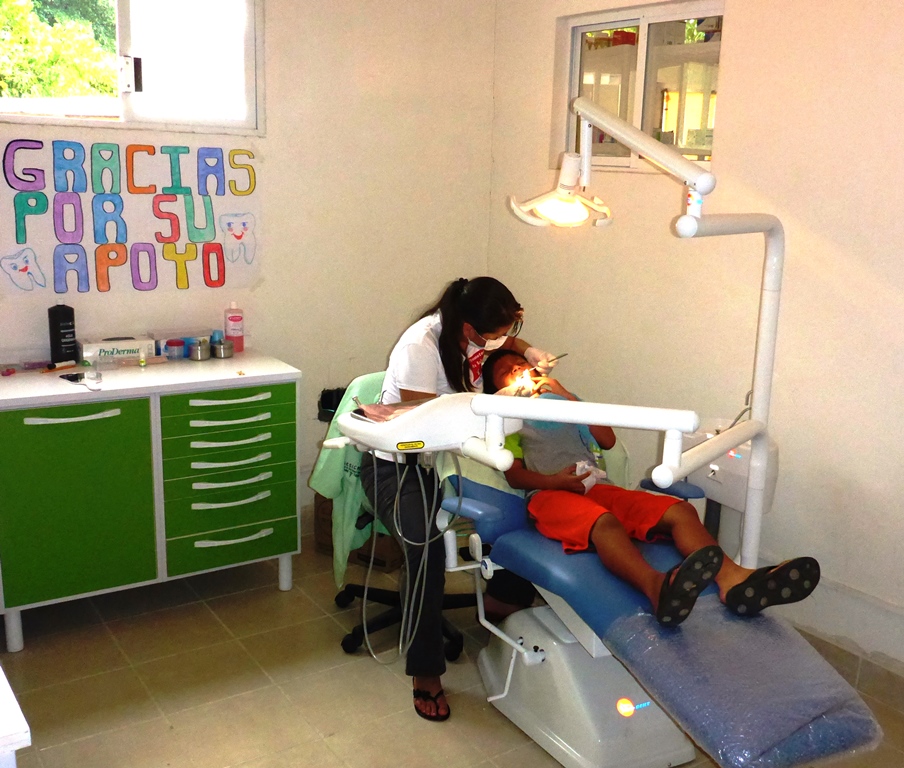
Drilling?? ouch!
Drilling?? ouch!

At the same time it brings back pictures of mothers feeding their babies with bottles filled with commercial fruit juice – a frequent image on the streets of Mexican towns and villages. Poverty has many faces and some of them are not as obvious as we think
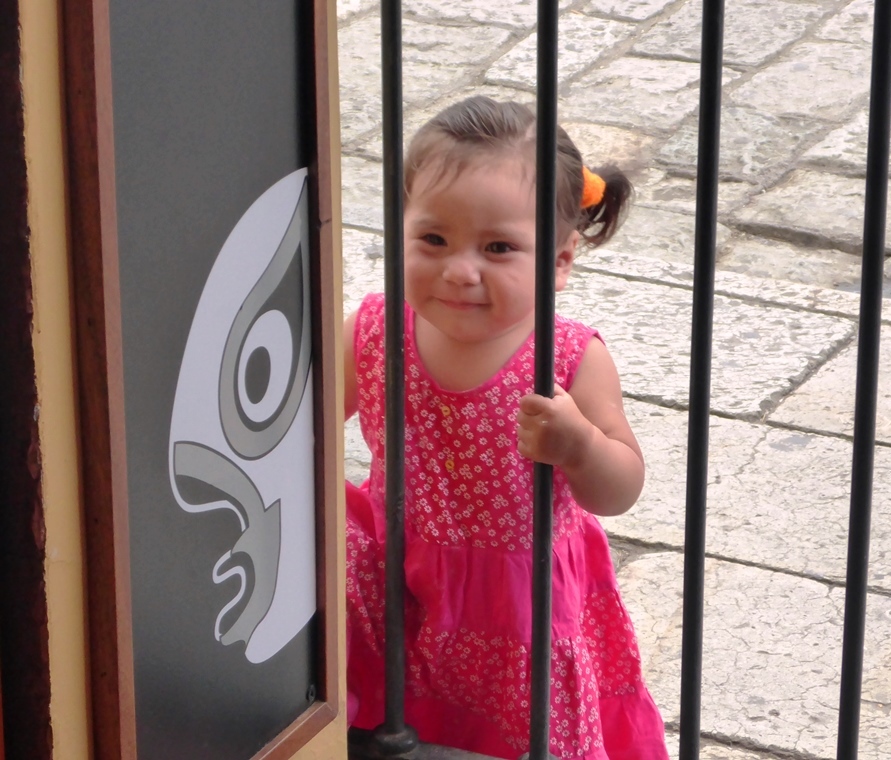
A safe place for children

The most difficult part of my journey was visiting Casa de las Flores in San Cristobal. It’s a daytime safe house for the “children of the streets” – not necessarily orphans or homeless children but young ones who spend their day selling trinkets, polishing shoes, begging, singing, etc. They do not have much of a childhood – no school but also no food, no play, no kindness or affection. Their ages range widely – basically as soon as they can walk around town they are being put to work. The little ones still have a smile and a wave of their hand but if fades fast. They learn that not selling anything results in beatings and starvation. The older ones will be abused sexually, physically; mentally – human trafficking is doing quite well in this area.

The vistas of San Cristobal

Claudia is the woman who started the shelter. Of course, for safety reasons neither full names nor addresses will appear on this page. She has dedicated many years to creating a place where any child can come and rest, eat, have some peace from the constant incredible stress he or she is facing. Later she added games – something totally unknown by most – and a shower so that once a week street dirt, lice and fleas can be at least threatened if not eliminated. In the last years, 2 more people have decided to help as educators, trying to teach reading and some basic arithmetic but mostly struggling with health education, human rights, and protection from abuse and so on.

The worst part is the helplessness – children come a few times and then disappear forever. Or they call from a cell phone telling Claudia they have been kidnapped but have no clue where they are. Or they are beaten by their parent and forbidden to return to Casa de las Flores and Claudia must watch them selling braided bracelets to tourists, fully knowing they have not had anything to eat in days.

Both AFCB and Abrazos have in the past supported the food costs and some other minor projects. It is but a small drop in the ocean and we do not know what else can be done to help, since many children are unable to come regularly for breakfast or lunch.

Elusive education
Elusive education

One day, walking through the city, I offered buns to each encountered child. Not a single one refused me. I felt more useless than ever and this part of my journey continues to bring up a lot of deep sadness and anger.

Communities in Chiapas

Time to let Peter go back to Canada and have Mona continue with the travels and  stories.

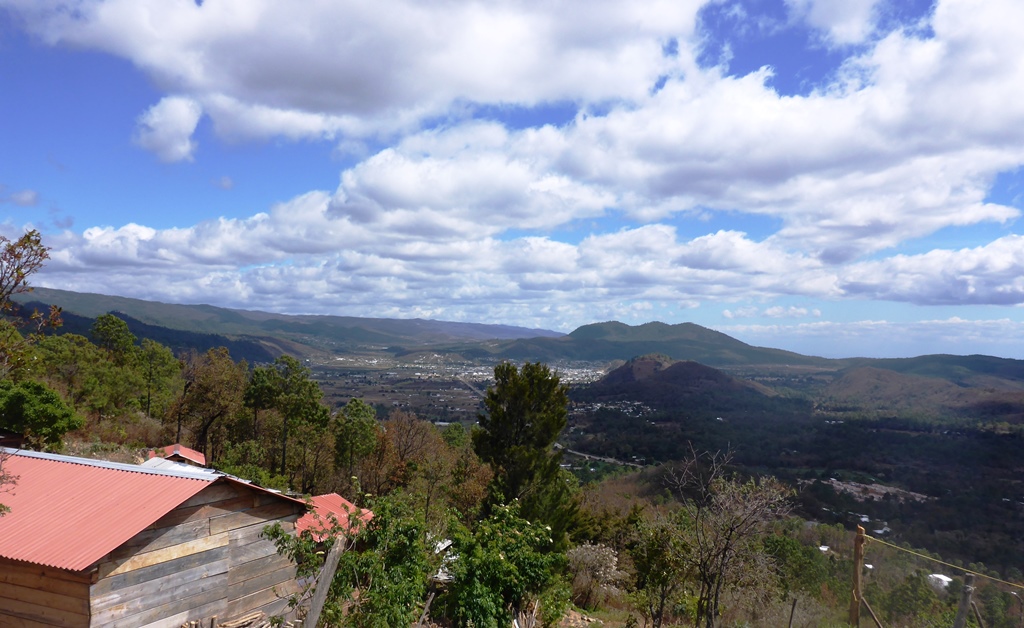
One of the earlier postings in this blog talked about Arthur Frederick Community builders and the work done by Paul and Diane Poirier in the province of Chiapas over the years. Since AFCB and Abrazos Canada are closely cooperating, I had to go and see for myself what was happening. Chiapas is a different Mexico altogether – or so it felt to me. The mountains in the San Cristobal area are green and beautiful: pines, cacti, tropical trees and incredibly beautiful flowers, all growing together.

the amazing mountains of Chiapas

A mixture of laden avocado trees compete for attention with the wild peach trees currently in bloom. The soil is fertile, the rain generous and the people hardworking.

Unfortunately the poverty is shocking for such a rich province. Unfair work practices leading to extreme exploitation of the population (particularly the indigenous people) combine with heavy deforestation to make room for agriculture and ranching. The factors leading to poverty are many and this space is inadequate to discuss them. The one problem AFCB is trying to address is the lack of healthy housing and access to education that only compounds the problems faced by the communities. Buildings are made of wooden boards, covered on the inside with plastic and paper to keep the wind out. The rain enters happily through every crack and of course under the bottom boards creating interior rivulets.

Floor patterns after rain

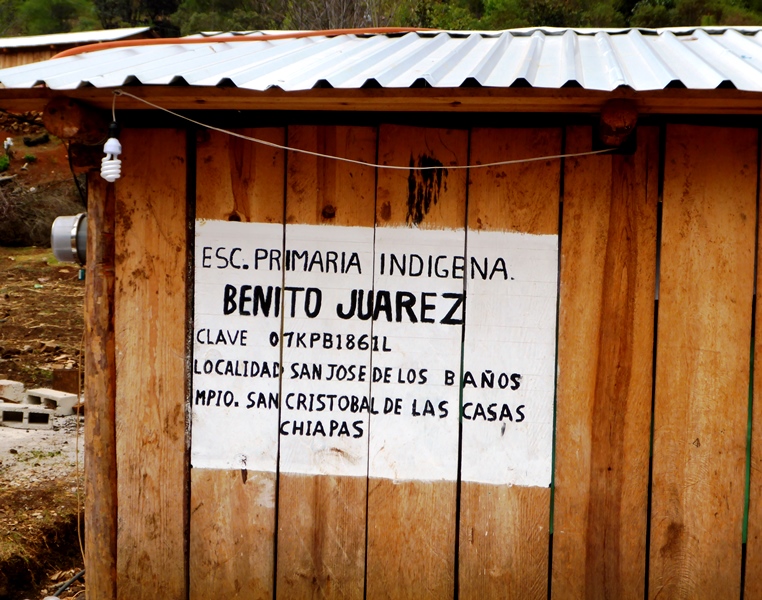
The only sources of heat are open fires, also used for all the cooking required to support the family. As recounted in the previous blog, AFCB focused in the past year on building houses for the poorest of the poor, while at the same time reinforcing the ties and support given by community members to those in need. (see our past page about AFCB ) The houses are small cement rectangles but are endowed with a solid roof and strong support pillars that are buried into the ground – after all this area is prone to earthquakes. If funding permits, small details are added to the doors and windows, helping the owners dream about colorful paint or other pretty elements they will eventually add to their home. Another problem are the schools and preschools. Remote communities either do not have one (and children need to walk for miles to attend school) or have a most insalubrious shack housing all children between the ages of 6 and 10 …or more.

Welcome to school!
Welcome to school!

Only children who have attended preschool are allowed to register for grade 1 – but what happens if there is no preschool because the local authorities have deemed there are not enough children to warrant building one? AFCB has decided to help build either a small preschool room adjacent to an existing school or a new building altogether in the places where no school is in existence.

the one (and only ) classroom of the school

What do the recipients say? They are proud people and want to participate in every aspect of the decision making process as well as the actual building. Men donate their spare time and walls are erected during weekends and evenings. All work must be finished before Paul’s departure for Canada. The women will tell us that they never dreamt of having a house; they are having a hard time believing all this is happening.

With Paul, Sebastiana and her family

Sebastiana, probably in her 80s and almost 4ft tall, reaches up to hug us “giants” and tells me she is finally warm and dry. Proudly she offers fruit from her garden which we accept happily – an exchange of love and support between equals, no more and no less.

The blue door!
The blue door!

INSFIDIM – another year

 My last full week with INSFIDIM and time to start to say goodbye. It is Monday morning and assembly, the National Anthem sung with fervour if not complete harmony, announcements and admonitions and congratulations for birthday

Is this your backpack?

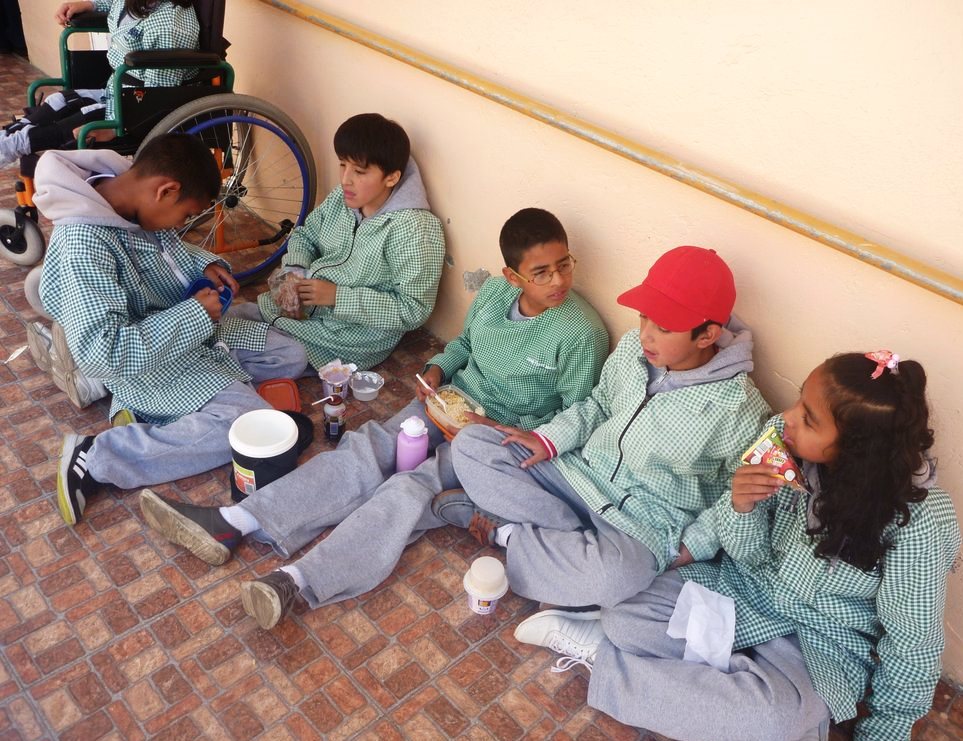
My class, taught with love and enthusiasm by SuzyCastro. Ten in all, different and all requiring indivividual attention. There is Dayana confined to her wheelchair and exhibiting extreme spasticity but always wanting to cut paper. Believe me having a spastic child using scissors requires one to maintain a high degree of concentration. Pamela, Jose, Jesús, Kevin & Patricia brother and sister, Ricky, Paul, Stalin and Emerson. All different but all are special. Of course the other classes have their complement of different and special children. At recess they come together to have their snacks, to greet a teacher with much affection, and to play. When playing somehow they forget their disabilities and enjoy the mayhem. 

Time for a snack
Time for a snack

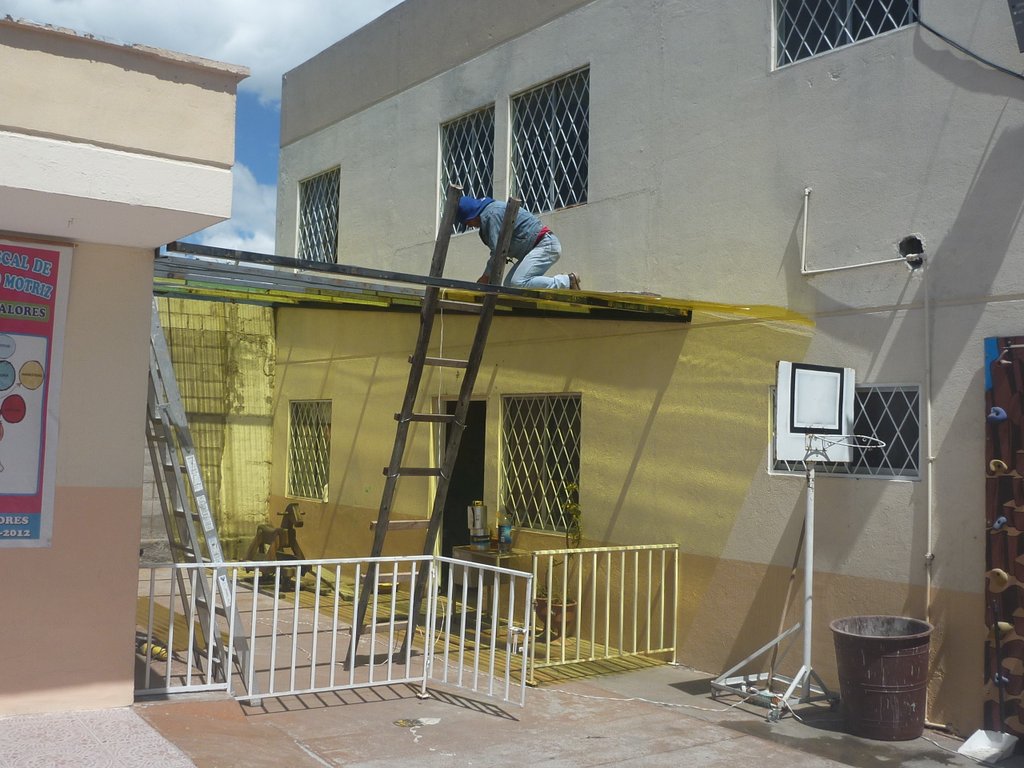
Each year, Abrazos Canada tries to help INSFIDIM by funding a project. This year the director, Marie requested that a new classroom be created to shelter the infants from the rain and sun, we are just south of the equator. Today the classroom has been completed much to the delight of the children and their teacher Lupita. 

Infants shelter construction

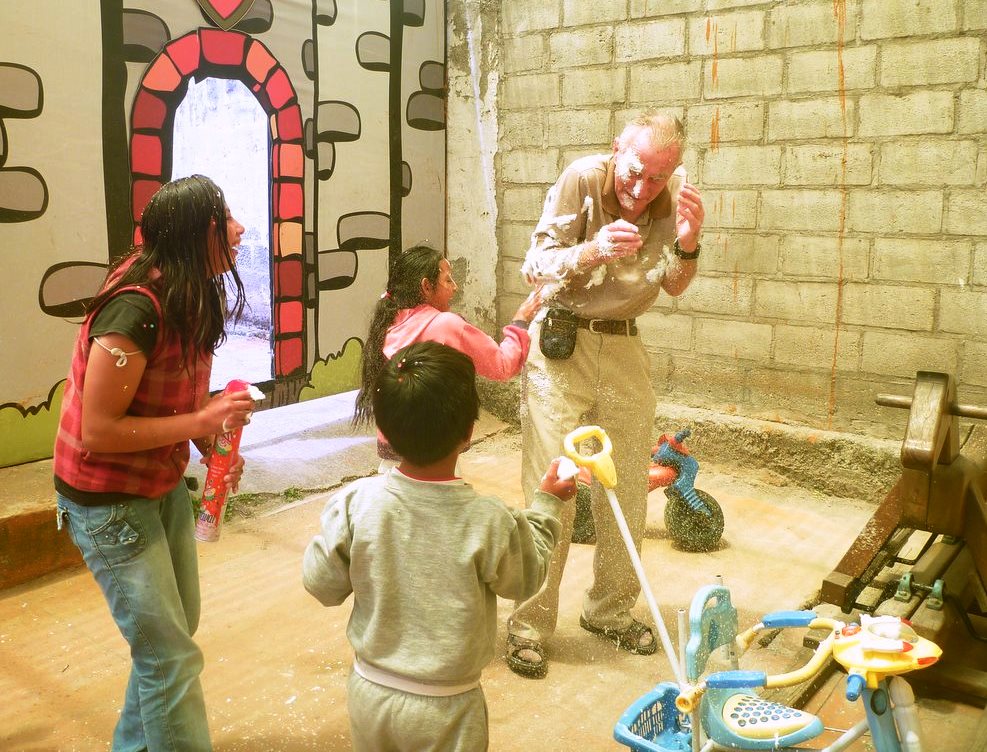
Last month, to celebrate the start of Carnival the school had a two week vacation. As is the custom during Carnival one gets sprayed or doused with water with one giving as good as one gets. The last day of school spray cans were in all hands and no one escaped. Of course the teachers and myself were prime targets. It was great fun. Farewell INSFIDIM Ojala! I will return next year.

Carnival! No one escapes the spray!