We have been at Pina Palmera for a week now and the days fly by with many things happening – here or in different communities.

The teams at Pina have continued with their outreach work, increasing awareness of disability and helping families and people with disabilities find solutions for integration in the community and support from the local authorities.
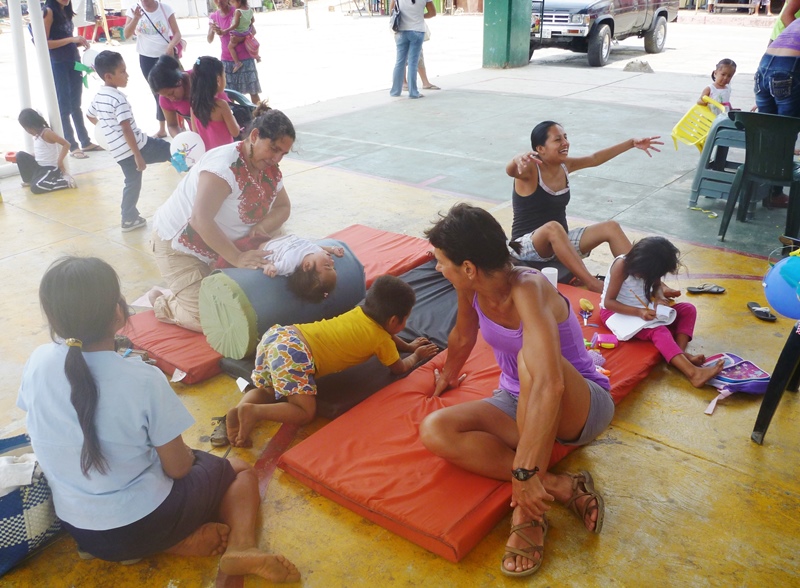
They visit distant communities on a biweekly basis and conduct their workshops and classes in a private location for all to see and ask questions if they want to. Children without disabilities are present and learn to interact with their classmates or neighbours while having fun.

Additionally, the Pina Palmera group have also been asked to give workshops about violence. This is a huge step, since most of the time violence is not acknowledged, it is part of “normal life” ; most violent events are either borne in silence (familial violence) or simply covered up (public violence).

To have adults (of both sexes) sit together, look at and discuss pictures representing violence and actually condemn it, as well as come up with solutions, is a huge step for the Pina team and the community as well.  The workshops are offered only to those requesting it (as everything that Pina does), They start with a presentation for the schoolchildren and then extend to their parents. Some communities are not even close to asking for a workshop, in others the topic of sexual abuse is met with dead silence . Celli (the worker leading this workshop) is always optimistic and points out that: “We start with small waves, they spread, and then we get asked back, or go to a new place. That is how it works – and it works!”
The home visits in different communities are going on regularly usually at 2 week intervals, sometimes a little longer. 
Our little oven on wheels – fits 6 people, 4 bags, 2 cushions…all in the front cabin!
The current students at Pina (Swedish and Canadian) are trudging through the incredible heat and dust along the staff and volunteers. 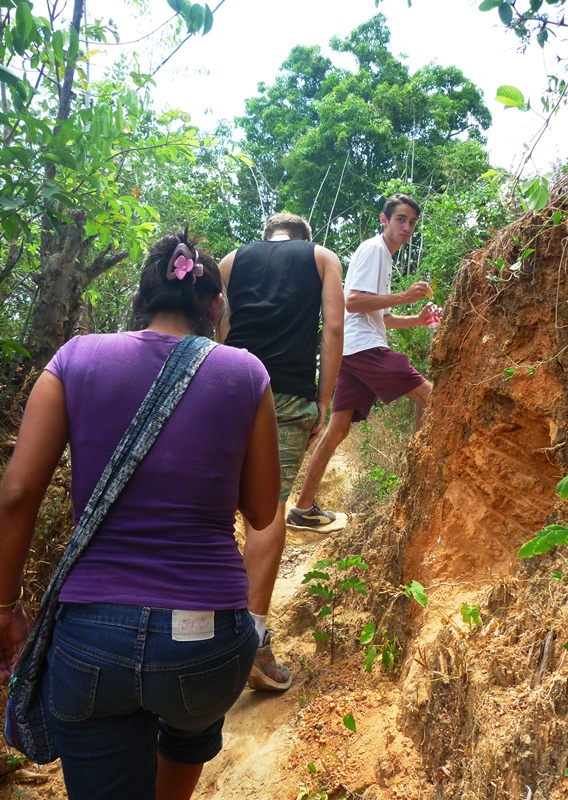 The team’s work consists of doing follow-up visits in schools with disabled children (blind or deaf) to talk to child and teacher about how integration in the school is happening and if the child is able to cope with the schoolwork. Afterwards, they visit the homes and talk to the parents. The goal is to make teachers and parents feel understood and supported, and have the children actually receive the help they are entitled to.

Again I am reminded of the importance of having access to and from a house or building – in so many places it is impossible for a disabled person to leave the house, never mind attend a school or just meet other people besides their immediate family.

If one adds to this the discrimination against the disabled, the lack of knowledge regarding how to help a deaf child (for example) and just the usual life stressors present in Mexico… ….well, I am just happy that people like those working in Pina Palmera exist!
 abrazoscanada